
Machanka (pork gravy for pancakes)
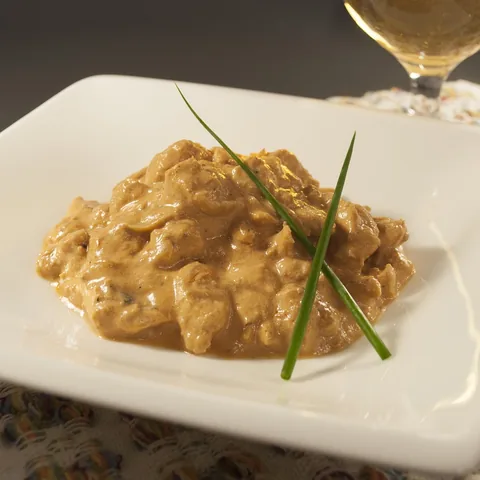
Machanka is a rich pork stew whose name comes from the Belarusian word for dipping. Ribs, smoked sausage and pieces of pork simmer in a creamy gravy thickened with browned flour. It is set in the middle of the table and everyone tears off pieces of thin pancake or draniki to scoop it up.
Diets
Allergens
Contains (in a typical recipe):
What it is made of
Recipe
Ingredients
- 600 g pork ribs
- 250 g smoked pork sausage
- 300 g pork shoulder
- 2 pcs onion
- 3 tbsp wheat flour
- 150 g sour cream
- 600 ml pork or chicken broth
- 2 pcs bay leaves
- salt and black pepper — to taste
- thin pancakes (blini), to serve
Method
- Cut the ribs into single pieces and the pork and sausage into chunks; brown them in a heavy pot.
- Add sliced onion and cook until soft.
- Sprinkle in the flour, dry-toasted in a pan until beige, and stir to coat the meat.
- Pour in the hot broth gradually, add bay leaves, salt and pepper and simmer covered for about 1 hour.
- Stir in the sour cream and warm through without boiling.
- Serve hot with a stack of blini for dipping.
How to make it lighter
- Skim the fat off the surface before adding the sour cream.
- Use more lean pork and fewer ribs and sausage for a lighter version.
- Serve with thin buckwheat pancakes and a pickled vegetable side.
History
Machanka is one of the best-known festive dishes of Belarusian village cooking, often served at Shrovetide and family celebrations. There are many local versions, from meaty ones to lean dairy or mushroom variants.
Count it in one photo
Point your camera at the table — Me Nutrition recognises Machanka (pork gravy for pancakes) and every other dish, with calories and macros for each. Ate only half? Slide it.
Download on the App StoreSimilar dishes
Values are estimates per 100 g for a typical recipe; home and restaurant versions vary. Diets and allergens are worked out from the ingredients of a typical recipe — always check with whoever cooked the dish. Not medical advice. Nutrition data: Me Nutrition dish database v15. How we count →