
Potato kishka (stuffed casing)
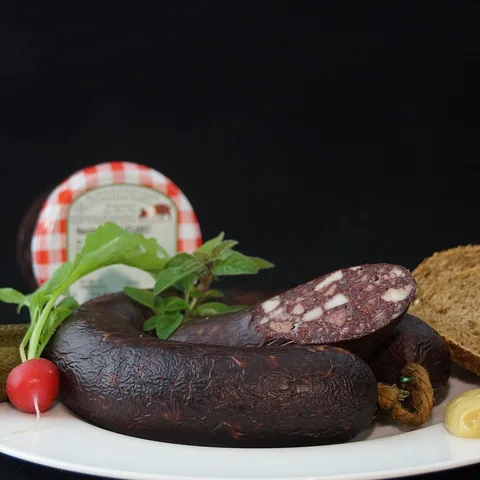
Potato kishka is a thick sausage made by filling cleaned pork casing with grated raw potato, fried salo and onion. As it bakes the filling turns soft and creamy while the casing becomes crisp and browned. It is sliced into rounds and served hot, often with sour cream or pickles.
Diets
Allergens
None of the 14 major allergens in a typical recipe.
What it is made of
Recipe
Ingredients
- 1200 g potatoes
- 1.5 m cleaned pork casing
- 150 g salo (cured pork fatback)
- 2 pcs onion
- salt and black pepper — to taste
Method
- Soak the casing in cold salted water and rinse it well inside and out.
- Fry the diced salo until crisp, add chopped onion and cook until golden.
- Finely grate the potatoes, drain a little liquid and mix with the salo, onion, salt and plenty of pepper.
- Tie one end of the casing and fill it loosely with the mixture, leaving room for expansion; tie the other end.
- Prick the casing in several places, lay it in a greased dish and bake at 180 °C for about 1 h 30 min, turning once.
- Let it rest briefly, slice and serve hot.
How to make it lighter
- Use a lean bacon or less salo; the potato stays moist anyway.
- Pair it with sauerkraut or fresh cabbage salad to add fiber.
- Keep portions to two or three slices with plenty of vegetables.
History
Kishka was a typical dish of the pig-slaughtering season in Belarusian villages, when every part of the animal was used. Potato took the place of grains as the main filling once it became the staple food of the region.
Count it in one photo
Point your camera at the table — Me Nutrition recognises Potato kishka (stuffed casing) and every other dish, with calories and macros for each. Ate only half? Slide it.
Download on the App StoreSimilar dishes
Values are estimates per 100 g for a typical recipe; home and restaurant versions vary. Diets and allergens are worked out from the ingredients of a typical recipe — always check with whoever cooked the dish. Not medical advice. Nutrition data: Me Nutrition dish database v15. How we count →