
Sauerkraut (kvashanaya kapusta)
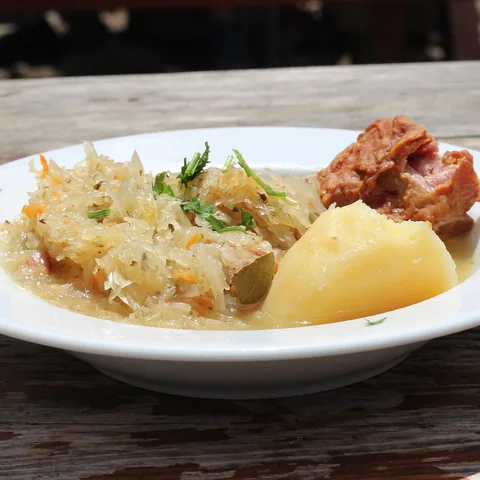
Home-fermented cabbage is a cornerstone of the Belarusian winter kitchen. Finely shredded cabbage is rubbed with salt and carrot and left to ferment until it turns pleasantly sour and crisp. It is eaten as a side with oil and onion, and also goes into soups, stews and pie fillings.
Diets
Allergens
None of the 14 major allergens in a typical recipe.
What it is made of
Recipe
Ingredients
- 2 kg white cabbage
- 200 g carrots
- 40 g coarse salt
- 1 tsp caraway seeds (optional)
Method
- Shred the cabbage finely and grate the carrots.
- Rub the cabbage with salt until it releases juice.
- Mix in the carrots and caraway.
- Pack tightly into a jar or crock so the juice covers the cabbage.
- Leave at room temperature for 3-5 days, piercing daily to release gas.
- Move to the fridge once it tastes sour enough.
How to make it lighter
- Eat it raw to keep the live cultures and vitamin C.
- Rinse briefly if you need to cut sodium.
- Dress with a little oil and onion instead of sugar.
History
Fermenting cabbage in barrels was the main way to store vitamins through winter in rural Belarus. Many families still make it every autumn after the cabbage harvest.
Count it in one photo
Point your camera at the table — Me Nutrition recognises Sauerkraut (kvashanaya kapusta) and every other dish, with calories and macros for each. Ate only half? Slide it.
Download on the App StoreSimilar dishes
Values are estimates per 100 g for a typical recipe; home and restaurant versions vary. Diets and allergens are worked out from the ingredients of a typical recipe — always check with whoever cooked the dish. Not medical advice. Nutrition data: Me Nutrition dish database v15. How we count →