
Vinegret (beet salad)
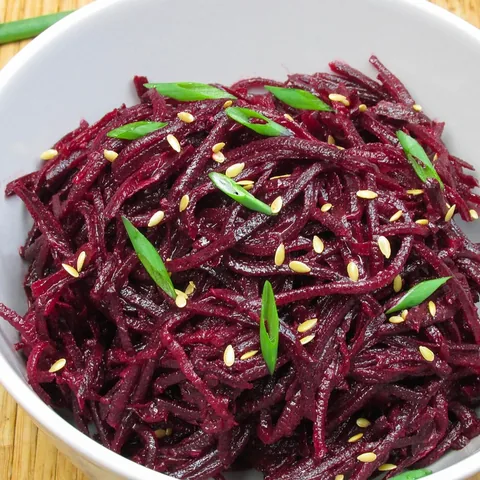
Vinegret is a ruby-red salad of boiled beets, potatoes and carrots mixed with crunchy pickles and sauerkraut. Unrefined sunflower oil gives it a nutty aroma, while the pickles bring sourness. It is a winter staple, eaten as a starter or alongside herring and bread.
Diets
Allergens
None of the 14 major allergens in a typical recipe.
What it is made of
Recipe
Ingredients
- 400 g beets
- 300 g potatoes
- 200 g carrots
- 150 g pickled cucumbers
- 150 g sauerkraut
- 60 g onion
- 40 ml sunflower oil
Method
- Boil the beets, potatoes and carrots in their skins until tender, then cool.
- Peel and cut everything into small even cubes.
- Dice the pickles and onion; squeeze the sauerkraut.
- Toss the beets with a little oil first so they don't stain everything.
- Combine all vegetables, dress with the remaining oil and salt to taste.
- Chill for 30 minutes before serving.
How to make it lighter
- Roast the beets instead of boiling for deeper flavor without extra fat.
- Use less oil and add a splash of pickle brine for tang.
- Add boiled beans for more protein and fiber.
History
The salad is shared across the former Soviet space and its name comes from the French word for a vinegar dressing. In Belarus it became a fixture of holiday and everyday tables thanks to cheap root vegetables and home ferments.
Count it in one photo
Point your camera at the table — Me Nutrition recognises Vinegret (beet salad) and every other dish, with calories and macros for each. Ate only half? Slide it.
Download on the App StoreSimilar dishes
Values are estimates per 100 g for a typical recipe; home and restaurant versions vary. Diets and allergens are worked out from the ingredients of a typical recipe — always check with whoever cooked the dish. Not medical advice. Nutrition data: Me Nutrition dish database v15. How we count →