
Biltong (South African dried beef)
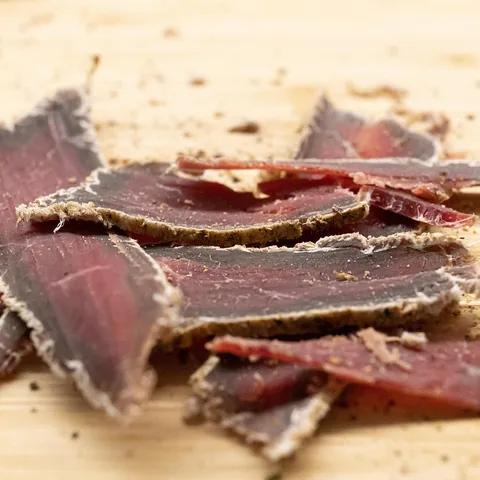
Biltong is beef cured with vinegar, salt and ground coriander, then hung to air-dry. It is chewy, savory and deeply meaty, usually sliced thin or shaved. South Africans snack on it at sports matches and road trips.
Diets
Allergens
None of the 14 major allergens in a typical recipe.
What it is made of
Recipe
Ingredients
- 1 kg beef silverside, cut in strips
- 60 ml brown vinegar
- 25 g coarse salt
- 10 g roasted ground coriander
- 5 g black pepper
Method
- Rub the meat strips with vinegar and let sit 30 minutes.
- Mix salt, coriander and pepper and coat the meat well.
- Rest it in the fridge for 12 hours.
- Hang the strips with hooks in a ventilated spot or drying box.
- Dry 4 to 6 days until firm but still slightly soft inside.
- Slice thin and store in paper.
How to make it lighter
- Choose lean cuts and trim visible fat to keep it light.
- Reduce the salt and let it marinate longer for flavor.
- Eat it in small portions as a high-protein snack.
History
The method grew out of the need to preserve meat on long overland journeys by Dutch-descended settlers. Vinegar and spices were used to protect the meat while it dried. Today it is a national snack, often made at home in drying boxes.
Count it in one photo
Point your camera at the table — Me Nutrition recognises Biltong (South African dried beef) and every other dish, with calories and macros for each. Ate only half? Slide it.
Download on the App StoreSimilar dishes

Values are estimates per 100 g for a typical recipe; home and restaurant versions vary. Diets and allergens are worked out from the ingredients of a typical recipe — always check with whoever cooked the dish. Not medical advice. Nutrition data: Me Nutrition dish database v15. How we count →