
Bocadillo veleño
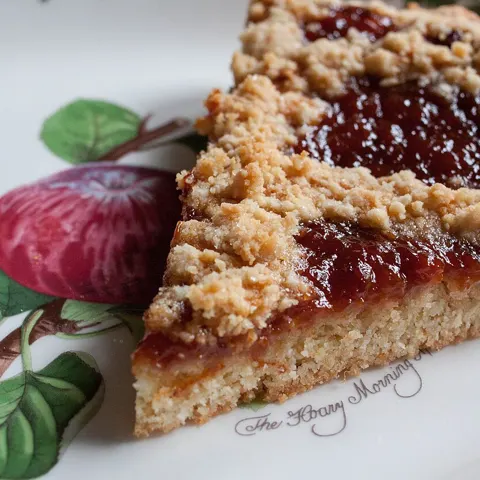
Bocadillo veleño is a dense, sliceable guava paste made from red and white guava pulp cooked with panela or sugar. The bars are often two-toned and wrapped in dried bijao leaves, which give them a faint earthy aroma. It is sweet and slightly tart, and it is eaten on its own or with a slice of fresh cheese, a pairing called "matrimonio".
Diets
Allergens
None of the 14 major allergens in a typical recipe.
What it is made of
Recipe
Ingredients
- 1.5 kg ripe guavas
- 600 g sugar or grated panela
- 200 ml water
- Dried bijao leaves or baking paper
Method
- Wash and quarter the guavas, then cook with water until soft.
- Blend and strain to remove the seeds.
- Cook the pulp with sugar over low heat, stirring constantly, for 1-1.5 hours until it pulls from the pan.
- Pour into a lined tray and let it set overnight.
- Cut into bars and wrap each in a bijao leaf.
How to make it lighter
- Eat a small bar with cheese for protein.
- Cut it into thin slices as a sweet bite.
- Choose versions with less added sugar.
History
The sweet is named after the town of Vélez in Santander, which is famous for producing it. Bocadillo veleño has protected designation of origin status in Colombia, and wrapping it in bijao leaves is a traditional practice there.
Count it in one photo
Point your camera at the table — Me Nutrition recognises Bocadillo veleño and every other dish, with calories and macros for each. Ate only half? Slide it.
Download on the App StoreSimilar dishes

Values are estimates per 100 g for a typical recipe; home and restaurant versions vary. Diets and allergens are worked out from the ingredients of a typical recipe — always check with whoever cooked the dish. Not medical advice. Nutrition data: Me Nutrition dish database v15. How we count →