
Mazamorra antioqueña (hominy corn in milk)
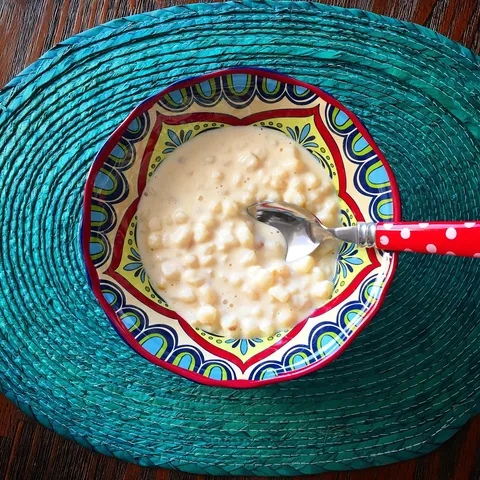
Antioquian mazamorra is a simple, much-loved drink-dessert made from dried white corn that has been peeled and cooked for hours until the kernels are tender and the cooking liquid turns milky. It is served in a glass or bowl topped up with cold milk, and eaten with a spoon alongside a bite of panela or a sweet like bocadillo de guayaba. Its taste is mild and comforting, sweetened only as much as each person likes.
Diets
Allergens
Contains (in a typical recipe):
What it is made of
Recipe
Ingredients
- 500 g dried peeled white hominy (maíz trillado)
- 3 l water
- 1 l cold milk
- 200 g panela, in pieces
Method
- Soak the corn overnight and drain.
- Simmer in fresh water for 2.5–3 hours, adding water as needed, until very soft.
- Cool slightly; the liquid should be thick and cloudy.
- Serve the corn and some of its liquid in glasses topped with cold milk.
- Offer panela on the side to bite or crumble in.
How to make it lighter
- Use skimmed milk and skip the panela for a light snack.
- Sweeten lightly with cinnamon instead of sugar.
- Hominy is filling and fat-free — keep portions to one glass.
History
Mazamorra is an old staple of rural Antioquia, often taken after lunch to finish the meal. Vendors in Medellín used to sell it from carts, a scene still remembered in local culture.
Count it in one photo
Point your camera at the table — Me Nutrition recognises Mazamorra antioqueña (hominy corn in milk) and every other dish, with calories and macros for each. Ate only half? Slide it.
Download on the App StoreSimilar dishes
Values are estimates per 100 g for a typical recipe; home and restaurant versions vary. Diets and allergens are worked out from the ingredients of a typical recipe — always check with whoever cooked the dish. Not medical advice. Nutrition data: Me Nutrition dish database v15. How we count →