
Bolo de rolo (guava roll cake)
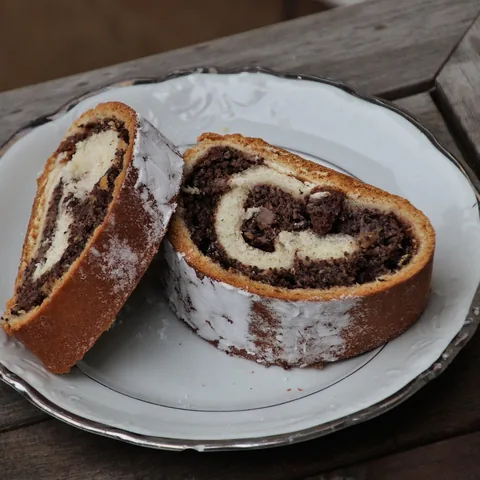
Bolo de rolo is a slim roll made of many paper-thin buttery sponge layers, each spread with melted guava paste and rolled tightly. Cut into slices, it shows a fine spiral of cake and fruit. It is sweet, buttery and slightly tart, and is served in thin slices with coffee.
Diets
Allergens
Contains (in a typical recipe):
What it is made of
Recipe
Ingredients
- 250 g butter, softened
- 250 g sugar
- 5 eggs
- 250 g flour
- 400 g guava paste
- 100 ml water
Method
- Beat butter and sugar until pale, then add eggs one at a time and fold in the flour.
- Melt the guava paste with the water into a spreadable cream.
- Spread a very thin layer of batter on a greased, lined tray and bake at 200 °C for 5-6 minutes.
- Turn out onto a sugared cloth, spread with guava and roll up tightly.
- Bake the next layer, spread with guava and roll it around the first roll; repeat until the batter is used.
- Cool completely and cut into thin slices.
How to make it lighter
- Serve thin slices: a 2 cm slice is plenty.
- Choose guava paste with less added sugar.
- Wrap well; it keeps several days, so you can portion it slowly.
History
The cake is considered a descendant of Portuguese rolled cakes adapted with guava, a local fruit. It was declared part of Pernambuco's cultural heritage by state law in 2007 and is a classic souvenir from Recife.
Count it in one photo
Point your camera at the table — Me Nutrition recognises Bolo de rolo (guava roll cake) and every other dish, with calories and macros for each. Ate only half? Slide it.
Download on the App StoreSimilar dishes
Values are estimates per 100 g for a typical recipe; home and restaurant versions vary. Diets and allergens are worked out from the ingredients of a typical recipe — always check with whoever cooked the dish. Not medical advice. Nutrition data: Me Nutrition dish database v15. How we count →