
Bife acebolado (beef steak with onions)
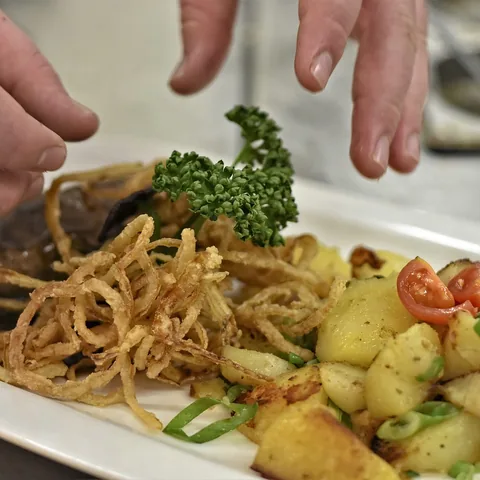
Bife acebolado is one of Brazil's everyday meals: thin, garlic-seasoned beef steaks seared in a hot pan and topped with lots of sliced onion cooked in the meat juices until soft and slightly caramelised. A splash of vinegar or water lifts the browned bits from the pan. It is eaten with rice, beans and salad.
Diets
Allergens
None of the 14 major allergens in a typical recipe.
What it is made of
Recipe
Ingredients
- 4 thin beef steaks (about 600 g)
- 3 large onions, sliced
- 3 garlic cloves
- 1 tbsp vinegar
- 2 tbsp oil
- Salt and pepper
Method
- Season the steaks with crushed garlic, salt and pepper.
- Sear them in a very hot pan, 1-2 minutes per side, and set aside.
- Add the onions to the same pan and cook until soft and golden.
- Deglaze with vinegar and a little water.
- Return the steaks to the pan briefly and serve covered with the onions.
How to make it lighter
- Choose a lean cut like topside.
- Use a non-stick pan and little oil.
- Serve with beans and salad and a small portion of rice.
History
It is a staple of home cooking and of the lunch counters that serve prato feito across Brazil. The method reflects the Portuguese habit of pairing pan-fried meat with onions.
Count it in one photo
Point your camera at the table — Me Nutrition recognises Bife acebolado (beef steak with onions) and every other dish, with calories and macros for each. Ate only half? Slide it.
Download on the App StoreSimilar dishes




Values are estimates per 100 g for a typical recipe; home and restaurant versions vary. Diets and allergens are worked out from the ingredients of a typical recipe — always check with whoever cooked the dish. Not medical advice. Nutrition data: Me Nutrition dish database v15. How we count →