
Feijão carioca (Brazilian everyday beans)
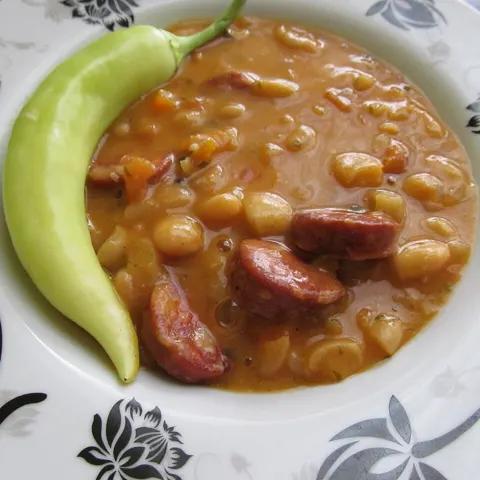
Feijão carioca is the light-brown pinto bean cooked daily in Brazilian homes, especially in the Southeast. The beans are simmered until soft with bay leaf, then finished with a sizzle of garlic and onion fried in oil, and a few are mashed to thicken the broth. The taste is earthy and comforting, with a creamy liquid that is spooned over rice. It is the other half of the national plate of rice and beans.
Diets
Allergens
None of the 14 major allergens in a typical recipe.
What it is made of
Recipe
Ingredients
- 500 g dried pinto (carioca) beans, soaked overnight
- 2 bay leaves
- 2 tbsp vegetable oil
- 4 cloves garlic, crushed
- 1 onion, chopped
- Salt
Method
- Drain the soaked beans and cover with fresh water by 3 cm.
- Add bay leaves and pressure-cook 25 minutes, or simmer about 1 hour until soft.
- In a pan, fry onion and garlic in oil until golden.
- Add a ladle of beans, mash them in the pan, then pour everything back into the pot.
- Simmer 10 minutes more until the broth thickens and season with salt.
How to make it lighter
- Use only one spoon of oil for the garlic base.
- Serve a larger portion of beans and less rice for more protein and fibre.
- Discard the soaking water to make the beans easier to digest.
History
The carioca bean takes its name from a striped variety that recalled the wave pattern of Rio de Janeiro's famous pavements, though it is grown and eaten nationwide. Black beans dominate in Rio itself, while carioca beans are the most consumed type in the country overall.
Count it in one photo
Point your camera at the table — Me Nutrition recognises Feijão carioca (Brazilian everyday beans) and every other dish, with calories and macros for each. Ate only half? Slide it.
Download on the App StoreSimilar dishes
Values are estimates per 100 g for a typical recipe; home and restaurant versions vary. Diets and allergens are worked out from the ingredients of a typical recipe — always check with whoever cooked the dish. Not medical advice. Nutrition data: Me Nutrition dish database v15. How we count →