
Mandioca frita (fried cassava)
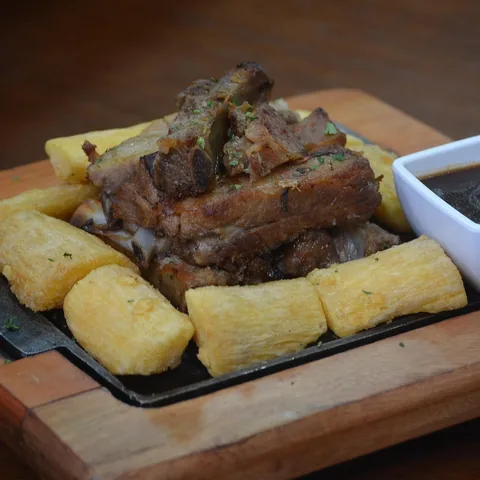
Mandioca frita is cassava root first boiled until tender, then cut into thick sticks and deep-fried. The outside turns golden and crackly while the inside stays soft and almost creamy, with a mild, slightly sweet taste. In Brazil it is a favourite bar snack and a side for barbecued meat, often served with a dip or a sprinkle of salt. It is naturally gluten-free.
Diets
Allergens
None of the 14 major allergens in a typical recipe.
What it is made of
Recipe
Ingredients
- 1 kg fresh cassava (or frozen, peeled)
- Oil for deep-frying
- Salt
Method
- Peel the cassava, cut into 8 cm pieces and remove the woody core.
- Boil in salted water 20-25 minutes until tender but not falling apart.
- Drain, cool and cut into thick sticks.
- Deep-fry at 180 °C for 5-6 minutes until golden and crisp.
- Drain on paper and sprinkle with salt.
How to make it lighter
- Bake the boiled sticks brushed with a little oil at 220 °C instead of frying.
- Let the sticks dry well before frying so they absorb less oil.
- Pair with grilled fish and salad rather than other fried foods.
History
Cassava was domesticated in South America and was a staple for Indigenous peoples long before colonisation. Frying it is a more modern habit, and today mandioca frita is a standard item in Brazilian botecos and churrascarias.
Count it in one photo
Point your camera at the table — Me Nutrition recognises Mandioca frita (fried cassava) and every other dish, with calories and macros for each. Ate only half? Slide it.
Download on the App StoreSimilar dishes
Values are estimates per 100 g for a typical recipe; home and restaurant versions vary. Diets and allergens are worked out from the ingredients of a typical recipe — always check with whoever cooked the dish. Not medical advice. Nutrition data: Me Nutrition dish database v15. How we count →