
Tapioca (Brazilian cassava crepe)
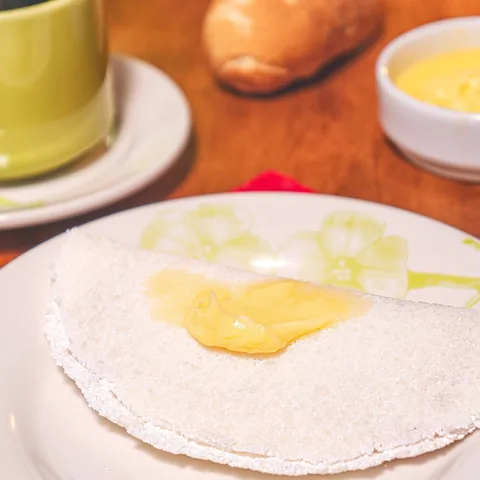
Brazilian tapioca is a thin round crepe made only from moistened cassava starch sifted onto a hot pan. The grains fuse into a soft, slightly chewy disc in a minute, with no oil, eggs or flour. It is folded around fillings such as queijo coalho, grated coconut, butter, carne de sol or condensed milk. People eat it for breakfast or as an afternoon snack, often from street stalls.
Diets
Allergens
Contains (in a typical recipe):
What it is made of
Recipe
Ingredients
- 200 g hydrated tapioca starch (goma)
- 60 g queijo coalho, grated
- 2 tbsp grated fresh coconut
- 10 g butter
- Pinch of salt
Method
- Rub the goma between your fingers and pass it through a sieve.
- Heat a non-stick pan over medium heat without oil.
- Sift a thin, even layer of starch to cover the base.
- Cook about 1 minute until the disc holds together and lifts easily.
- Scatter cheese and coconut on one half.
- Flip, fold in half and add a little butter on top.
- Serve immediately while soft.
How to make it lighter
- Skip the butter; the crepe needs no fat to cook.
- Fill with eggs, tomato or chicken for more protein.
- Keep sweet fillings small, as the crepe itself is mostly starch.
History
Cassava and its starch were used by Indigenous peoples of Brazil long before colonisation, and the tapioca crepe grew from that tradition. It became a symbol of the Northeast, especially Olinda and Recife, and spread across the country as a gluten-free snack.
Count it in one photo
Point your camera at the table — Me Nutrition recognises Tapioca (Brazilian cassava crepe) and every other dish, with calories and macros for each. Ate only half? Slide it.
Download on the App StoreSimilar dishes
Values are estimates per 100 g for a typical recipe; home and restaurant versions vary. Diets and allergens are worked out from the ingredients of a typical recipe — always check with whoever cooked the dish. Not medical advice. Nutrition data: Me Nutrition dish database v15. How we count →