
Cocada (Brazilian coconut candy)
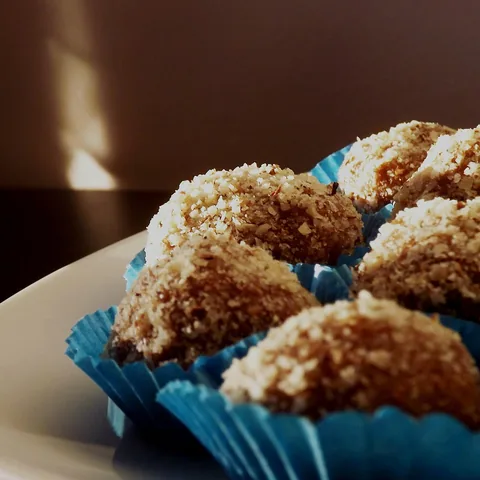
Cocada is a dense, sweet candy made from freshly grated coconut cooked down with sugar until it binds. Some versions stay soft and chewy, others are baked until golden on top. It is sold in squares or spoonfuls at beach stalls and street markets, especially in the Northeast.
Diets
Allergens
Contains (in a typical recipe):
What it is made of
Recipe
Ingredients
- 300 g freshly grated coconut
- 250 g sugar
- 200 g condensed milk
- 150 ml water
- 20 g butter
Method
- Boil the sugar and water for 5 minutes into a light syrup.
- Add the grated coconut and stir over medium heat.
- Pour in the condensed milk and butter and keep stirring.
- Cook until the mixture pulls away from the bottom of the pan, about 15 minutes.
- Spread on a greased tray or drop spoonfuls onto parchment.
- For a baked version, bake at 180 °C for 15 minutes until golden, then cool and cut.
How to make it lighter
- Cut small pieces; cocada is very energy-dense.
- Skip the condensed milk and use less sugar for a lighter, more coconut-forward candy.
- Store airtight and enjoy as an occasional treat rather than a daily snack.
History
Coconut sweets spread along the Brazilian coast during the colonial period, when sugar production and coconut palms were both abundant. Cocada remains one of the most typical street sweets of Bahia and neighbouring states.
Count it in one photo
Point your camera at the table — Me Nutrition recognises Cocada (Brazilian coconut candy) and every other dish, with calories and macros for each. Ate only half? Slide it.
Download on the App StoreSimilar dishes
Values are estimates per 100 g for a typical recipe; home and restaurant versions vary. Diets and allergens are worked out from the ingredients of a typical recipe — always check with whoever cooked the dish. Not medical advice. Nutrition data: Me Nutrition dish database v15. How we count →