
Vinagrete (Brazilian vinaigrette salsa)
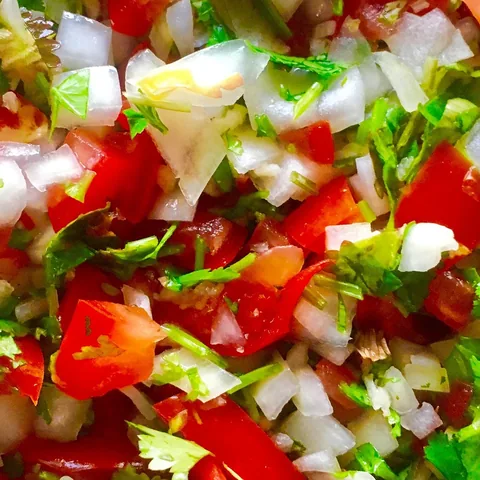
Vinagrete is a chopped salsa of tomato, onion and green pepper dressed with vinegar, oil, salt and parsley. It is bright, juicy and sharp, cutting through the richness of grilled meat. At a churrasco it is spooned over sliced picanha or sausages, and it is also eaten with farofa, rice and beans. It is best made shortly before serving.
Diets
Allergens
None of the 14 major allergens in a typical recipe.
What it is made of
Recipe
Ingredients
- 4 ripe tomatoes
- 1 onion
- 1 green bell pepper
- 3 tbsp white vinegar
- 3 tbsp olive oil
- 2 tbsp chopped parsley
- Salt
Method
- Seed the tomatoes and dice them finely.
- Dice the onion and pepper to the same small size.
- Mix the vegetables in a bowl.
- Add vinegar, oil, salt and parsley and stir.
- Rest 10 minutes so the flavours meld, then serve.
How to make it lighter
- Cut the oil to one tablespoon; the tomato juices carry the dressing.
- Soak the chopped onion in cold water for a milder taste.
- Use it as a topping for grilled fish or chicken instead of heavier sauces.
History
The name simply means vinaigrette in Portuguese, but in Brazil it refers to this vegetable salsa rather than a plain dressing. It is a standard companion of churrasco, the barbecue tradition associated especially with the southern gaúcho culture.
Count it in one photo
Point your camera at the table — Me Nutrition recognises Vinagrete (Brazilian vinaigrette salsa) and every other dish, with calories and macros for each. Ate only half? Slide it.
Download on the App StoreSimilar dishes
Values are estimates per 100 g for a typical recipe; home and restaurant versions vary. Diets and allergens are worked out from the ingredients of a typical recipe — always check with whoever cooked the dish. Not medical advice. Nutrition data: Me Nutrition dish database v15. How we count →