
Couve à mineira (sautéed collard greens)
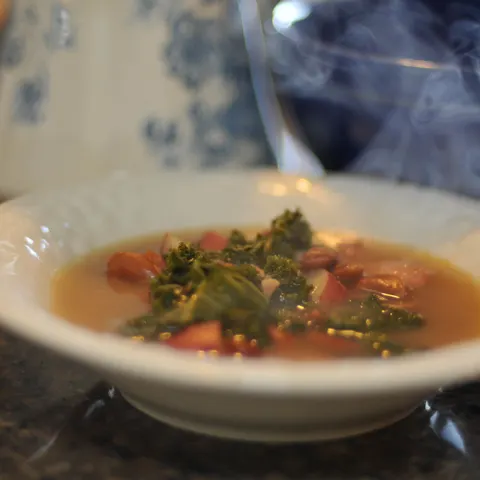
Couve à mineira is collard greens cut into very thin ribbons and tossed for just a minute or two in hot oil with garlic. The leaves stay bright green, slightly crisp and pleasantly bitter. It is the classic side to feijoada, tutu de feijão and other heavy dishes from Minas Gerais, adding freshness to the plate. The secret is the fine cut and a short cooking time.
Diets
Allergens
None of the 14 major allergens in a typical recipe.
What it is made of
Recipe
Ingredients
- 1 bunch collard greens (about 400 g)
- 3 cloves garlic, chopped
- 2 tbsp olive oil
- Salt
Method
- Wash the leaves and cut out the thick central stems.
- Stack the leaves, roll them tightly and slice into ribbons as thin as possible.
- Heat the oil, add the garlic and cook until just golden.
- Add the greens and stir over high heat for 1-2 minutes.
- Season with salt and serve immediately.
How to make it lighter
- Use one tablespoon of oil and a splash of water to wilt the greens.
- Add lemon juice at the end to boost iron absorption from the leaves.
- Serve a big portion: it is very low in calories and rich in fibre.
History
The dish belongs to the comida mineira, the home cooking of Minas Gerais known for pork, beans, cornmeal and greens. It became a fixture alongside feijoada in much of Brazil.
Count it in one photo
Point your camera at the table — Me Nutrition recognises Couve à mineira (sautéed collard greens) and every other dish, with calories and macros for each. Ate only half? Slide it.
Download on the App StoreSimilar dishes
Values are estimates per 100 g for a typical recipe; home and restaurant versions vary. Diets and allergens are worked out from the ingredients of a typical recipe — always check with whoever cooked the dish. Not medical advice. Nutrition data: Me Nutrition dish database v15. How we count →