
Bubur ayam (Indonesian chicken rice porridge)
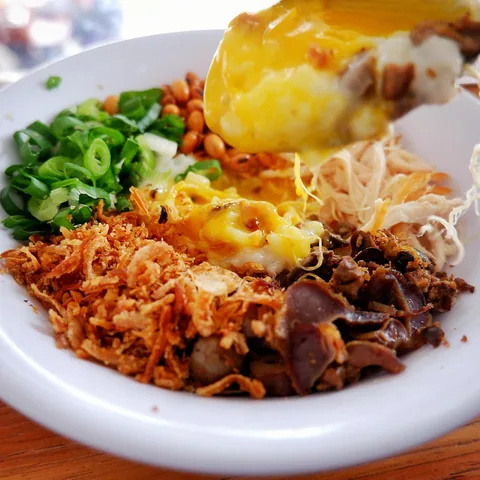
Bubur ayam is a smooth, long-cooked rice porridge served with shredded chicken, fried shallots, scallion, crackers and a drizzle of soy sauce and chicken broth. Many versions add a soft egg and chili sambal. It is typically a breakfast and street food, and it is gentle on the stomach.
Diets
Allergens
Contains (in a typical recipe):
What it is made of
Recipe
Ingredients
- 150 g rice
- 1.5 litres chicken broth
- 300 g chicken breast, poached and shredded
- 2 tbsp fried shallots
- 2 scallions, sliced
- 3 tbsp soy sauce
- 2 soft-boiled eggs
- Crackers (kerupuk) and chili sambal to serve
Method
- Simmer the rice in the broth, stirring often, for about 45 minutes until creamy.
- Poach the chicken in the same broth and shred it.
- Season the porridge with salt and white pepper.
- Ladle into bowls.
- Top with chicken, egg, scallion and fried shallots.
- Add soy sauce, crackers and sambal.
How to make it lighter
- Use brown or red rice for extra fibre.
- Go easy on crackers and fried shallots to cut the fat.
- Limit the soy sauce to reduce sodium.
History
Rice porridge of this kind is eaten across East and Southeast Asia, and the Indonesian version is closely tied to Chinese-Indonesian cooking. Vendors selling it from carts or stalls in the morning are a familiar sight in Jakarta.
Count it in one photo
Point your camera at the table — Me Nutrition recognises Bubur ayam (Indonesian chicken rice porridge) and every other dish, with calories and macros for each. Ate only half? Slide it.
Download on the App StoreSimilar dishes


Values are estimates per 100 g for a typical recipe; home and restaurant versions vary. Diets and allergens are worked out from the ingredients of a typical recipe — always check with whoever cooked the dish. Not medical advice. Nutrition data: Me Nutrition dish database v15. How we count →