
Kapama (Bulgarian layered meat and sauerkraut)
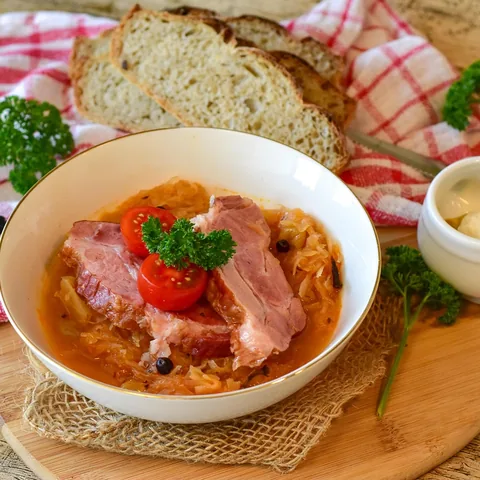
Kapama is a festive dish of several kinds of meat layered with sauerkraut or cabbage and rice, sealed in a clay pot and baked very slowly for hours. The result is soft, tangy and deeply savoury. It is traditionally served at large winter gatherings.
Diets
Allergens
None of the 14 major allergens in a typical recipe.
What it is made of
Recipe
Ingredients
- 400 g pork ribs or shoulder
- 200 g pork sausage
- 100 g smoked bacon
- 500 g sauerkraut
- 100 g rice
- 2 onions
- 1 tbsp paprika
- 200 ml water
- bay leaves, peppercorns
Method
- Sauté the onions with paprika and set aside.
- Layer sauerkraut, rice, meats and sausage in a clay pot.
- Tuck bay leaves and peppercorns between the layers.
- Add water and cover tightly with a lid or foil.
- Bake at 160 C for about 3 hours.
- Rest for 15 minutes before serving.
How to make it lighter
- Choose lean cuts and trim visible fat.
- Rinse the sauerkraut to reduce salt.
- Use more cabbage and less rice for a lighter dish.
History
The name comes from the way the pot is covered and sealed so all the aromas stay inside. It is especially tied to the mountain town of Bansko and to winter holidays in Bulgaria.
Count it in one photo
Point your camera at the table — Me Nutrition recognises Kapama (Bulgarian layered meat and sauerkraut) and every other dish, with calories and macros for each. Ate only half? Slide it.
Download on the App StoreSimilar dishes

Values are estimates per 100 g for a typical recipe; home and restaurant versions vary. Diets and allergens are worked out from the ingredients of a typical recipe — always check with whoever cooked the dish. Not medical advice. Nutrition data: Me Nutrition dish database v15. How we count →