
Cachanga (Andean fried flatbread)
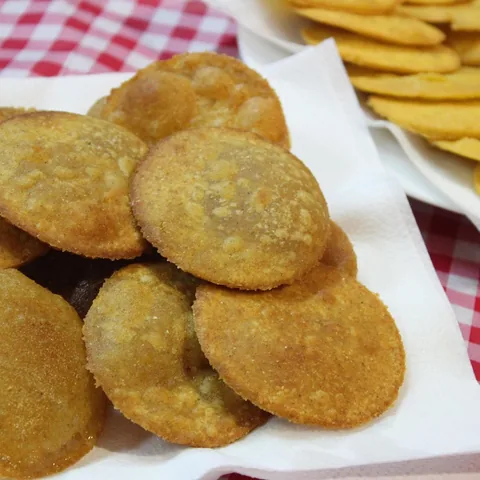
Cachanga is a simple fried flatbread from the Peruvian highlands. A soft wheat dough, often enriched with a little lard, is stretched into thin rounds and fried in a pan until it puffs up and turns blistered and golden. It is crisp at the edges and chewy in the middle. People eat it warm for breakfast or with afternoon coffee, sprinkled with sugar or honey, or alongside fresh cheese.
Diets
Allergens
Contains (in a typical recipe):
What it is made of
Recipe
Ingredients
- 500 g flour
- 10 g dried yeast, 1 tbsp sugar
- 50 g lard or butter
- 280 ml warm water, 1 tsp salt
- oil for frying
Method
- Mix flour, yeast, sugar and salt, add the lard and water and knead until smooth.
- Cover and let the dough rise for 1 hour.
- Divide into 8 balls and stretch each into a thin round.
- Fry in a pan with a little hot oil for 1–2 minutes per side until puffed and golden.
- Drain and serve warm with sugar, honey or cheese.
How to make it lighter
- Cook them on a dry griddle instead of oil.
- Use part wholemeal flour.
- Top with fresh cheese rather than sugar.
History
Cachangas are a homely bread of Andean regions such as Arequipa, Puno and Junín, made in households and sold at markets. They belong to the wheat-based breads that spread in the highlands after the Spanish introduced the grain.
Count it in one photo
Point your camera at the table — Me Nutrition recognises Cachanga (Andean fried flatbread) and every other dish, with calories and macros for each. Ate only half? Slide it.
Download on the App StoreSimilar dishes
Values are estimates per 100 g for a typical recipe; home and restaurant versions vary. Diets and allergens are worked out from the ingredients of a typical recipe — always check with whoever cooked the dish. Not medical advice. Nutrition data: Me Nutrition dish database v15. How we count →