
Caldo de mandioca (Brazilian cassava soup)
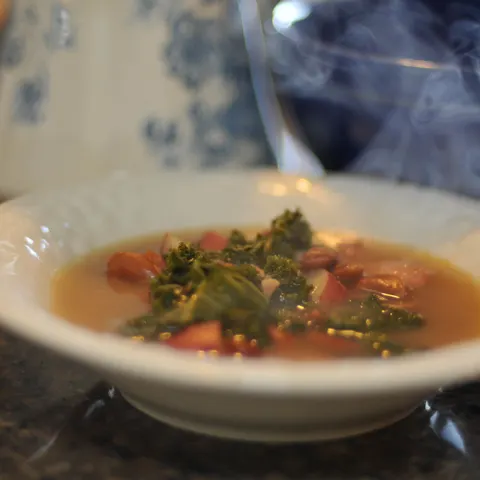
Caldo de mandioca is a smooth, thick soup of cassava cooked until soft and blended into a velvety cream. It is finished with seasoned minced or diced beef, or with sliced sausage, and plenty of chopped green herbs. It is warming and filling and especially popular at winter gatherings and June festivals in central and southeastern Brazil.
Diets
Allergens
None of the 14 major allergens in a typical recipe.
What it is made of
Recipe
Ingredients
- 800 g cassava, peeled and chopped
- 300 g beef, diced or minced
- 1 onion, chopped
- 3 garlic cloves
- 1 tomato, chopped
- 1.5 litres water or stock
- 1 tbsp oil
- Chopped cilantro or parsley
- Salt and pepper
Method
- Boil the cassava in the water until very soft, about 25 minutes, and remove the woody core.
- Blend the cassava with its cooking liquid until smooth.
- Brown the beef in oil in a large pot.
- Add onion, garlic and tomato and cook until soft.
- Pour in the cassava cream and simmer for 10 minutes, stirring.
- Season, add the herbs and serve hot.
How to make it lighter
- Use lean beef or chicken breast instead of sausage.
- Replace part of the cassava with pumpkin for fewer calories.
- Skip extra oil since the soup is naturally creamy.
History
Cassava is native to South America and has been central to Brazilian diets for centuries. Blended cassava soups, sometimes called vaca atolada when made with ribs, are typical of rural home cooking in Goiás, Minas Gerais and São Paulo.
Count it in one photo
Point your camera at the table — Me Nutrition recognises Caldo de mandioca (Brazilian cassava soup) and every other dish, with calories and macros for each. Ate only half? Slide it.
Download on the App StoreSimilar dishes
Values are estimates per 100 g for a typical recipe; home and restaurant versions vary. Diets and allergens are worked out from the ingredients of a typical recipe — always check with whoever cooked the dish. Not medical advice. Nutrition data: Me Nutrition dish database v15. How we count →