
Caldo de piedra (Oaxacan stone soup)
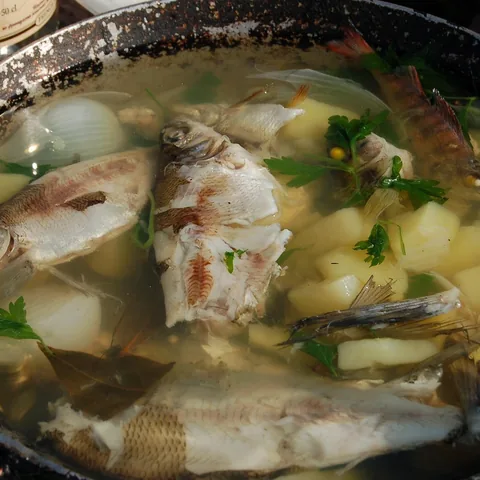
Caldo de piedra is a fish and shrimp broth cooked in an unusual way: raw fish, shrimp, tomato, onion, chile and epazote are placed in a gourd or bowl of water, and river stones heated in a fire are dropped in. The water boils within seconds and cooks the seafood almost instantly. The broth is light, fresh and herby, and the cooking is as much a spectacle as a meal.
Diets
Allergens
Contains (in a typical recipe):
What it is made of
Recipe
Ingredients
- 600 g white fish fillets
- 300 g raw shrimp
- 3 tomatoes, chopped
- 1 onion, chopped
- 2 serrano chiles
- 3 sprigs epazote or cilantro
- 1.5 l water
- salt
- smooth river stones (or simply a pot)
Method
- Heat clean, solid river stones in a wood fire for about an hour (or use a normal pot on the stove).
- Put the fish, shrimp, tomato, onion, chile and herbs into a large heatproof bowl with salted water.
- Carefully drop the hot stones in with tongs; the broth will boil instantly.
- Leave for 3-5 minutes until the fish is opaque.
- Remove the stones and serve at once with tortillas and lime.
How to make it lighter
- Very low in fat; add vegetables like chayote for more volume.
- On the stove, simmer gently only 5 minutes to keep the fish tender.
- Use only stones known to be safe for heating; porous or wet stones can crack.
History
The dish comes from the Chinantec people of San Felipe Usila in northern Oaxaca, where it is traditionally prepared by men beside the river. It has been recognised as an element of the community's cultural heritage and is served in a few restaurants that keep the method.
Count it in one photo
Point your camera at the table — Me Nutrition recognises Caldo de piedra (Oaxacan stone soup) and every other dish, with calories and macros for each. Ate only half? Slide it.
Download on the App StoreSimilar dishes
Values are estimates per 100 g for a typical recipe; home and restaurant versions vary. Diets and allergens are worked out from the ingredients of a typical recipe — always check with whoever cooked the dish. Not medical advice. Nutrition data: Me Nutrition dish database v15. How we count →