
Chilpachole de jaiba (spicy crab soup)
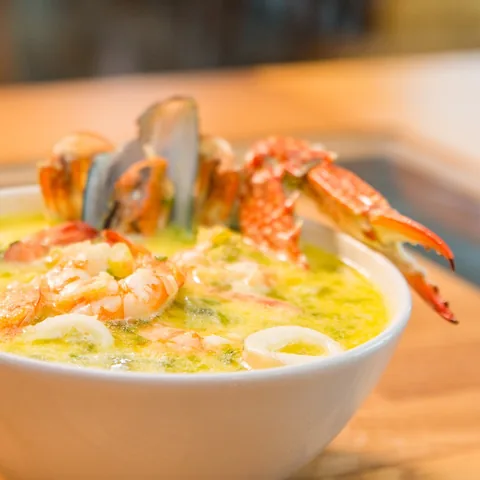
Chilpachole is a brothy soup of blue crab cooked in a sauce of toasted dried chilies, tomato, onion and garlic, perfumed with the herb epazote. It is spicy, savory and tastes strongly of the sea. It is eaten with lime wedges and tortillas, and diners often crack the crab pieces at the table.
Diets
Allergens
Contains (in a typical recipe):
What it is made of
Recipe
Ingredients
- 1 kg live or cooked blue crabs, cleaned and halved
- 200 g crab meat
- 3 guajillo chilies and 1 ancho chili, seeded
- 400 g tomatoes
- 1/2 onion, 3 garlic cloves
- 1.5 l fish or crab broth
- 2 sprigs epazote
- 1 tbsp oil
- Lime wedges to serve
Method
- Toast the chilies briefly on a dry pan, then soak in hot water for 10 minutes.
- Char the tomatoes, onion and garlic, then blend with the chilies and a little broth.
- Fry the sauce in the oil for 5 minutes until it darkens.
- Add the broth and crab halves and simmer for 20 minutes.
- Stir in the crab meat and epazote, cook 5 more minutes and serve with lime.
How to make it lighter
- It is naturally lean; avoid serving it with fried tortilla chips.
- Reduce the chilies and remove all seeds for a milder bowl.
- Bulk it up with chayote or carrots for a more filling meal.
History
Chilpachole is a traditional dish of the Gulf coast of Veracruz, where blue crab is plentiful in the lagoons and rivers. The name is usually explained as coming from Nahuatl words for chili and a thick sauce.
Count it in one photo
Point your camera at the table — Me Nutrition recognises Chilpachole de jaiba (spicy crab soup) and every other dish, with calories and macros for each. Ate only half? Slide it.
Download on the App StoreSimilar dishes
Values are estimates per 100 g for a typical recipe; home and restaurant versions vary. Diets and allergens are worked out from the ingredients of a typical recipe — always check with whoever cooked the dish. Not medical advice. Nutrition data: Me Nutrition dish database v15. How we count →