
Moqueca capixaba (Espírito Santo fish stew)
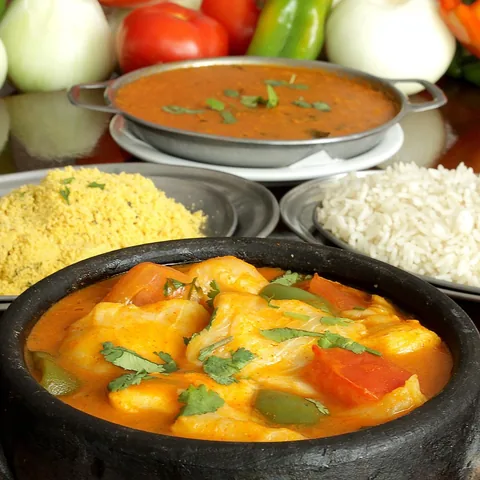
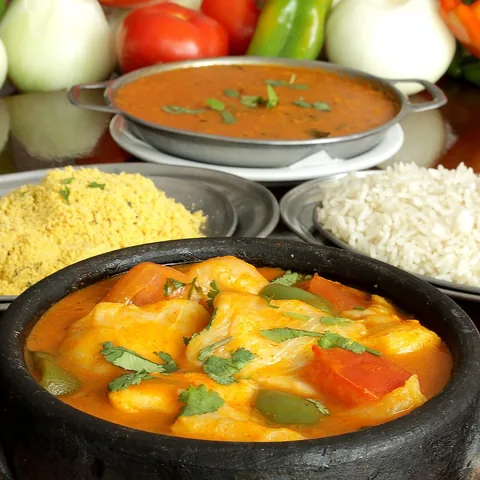
Moqueca capixaba is the fish stew of Espírito Santo, and locals are proud that it uses no coconut milk or dendê. Fish is cooked in its own juices with plenty of tomato, onion and cilantro, coloured red with annatto and enriched with a little olive oil. The result is clean, bright and tomato-forward. It is cooked and served in a black clay pot from Goiabeiras, with rice and pirão on the side.
Diets
Allergens
Contains (in a typical recipe):
What it is made of
Recipe
Ingredients
- 1 kg firm fish steaks (snook, grouper or hake)
- 4 tomatoes (400 g), sliced
- 2 onions (250 g), sliced
- 1 large bunch cilantro and spring onion
- 2 tbsp annatto oil or 1 tsp annatto paste
- 3 tbsp olive oil (40 ml)
- juice of 2 limes, 4 garlic cloves, salt
Method
- Season the fish with lime juice, crushed garlic and salt and leave for 30 minutes.
- Warm the olive oil and annatto in a clay pot and soften a layer of onion.
- Add the fish in one layer and cover with tomato, the rest of the onion and the herbs.
- Cover and cook over low heat for about 20 minutes; the fish releases its own liquid.
- Shake the pot instead of stirring so the fish stays whole.
- Serve in the pot with white rice and pirão made from the broth.
How to make it lighter
- It is already light; serve with plenty of salad to make a balanced meal.
- Use only 1–2 tbsp oil; the tomatoes give enough liquid.
- Make pirão with a smaller amount of cassava flour or skip it to reduce carbs.
History
The black clay pots used for this dish are made by women potters in the Goiabeiras district of Vitória, a craft recognised as Brazilian cultural heritage. The recipe is close to Indigenous fish stews coloured with annatto. A friendly rivalry with the Bahian moqueca is part of its identity.
Count it in one photo
Point your camera at the table — Me Nutrition recognises Moqueca capixaba (Espírito Santo fish stew) and every other dish, with calories and macros for each. Ate only half? Slide it.
Download on the App StoreSimilar dishes
Values are estimates per 100 g for a typical recipe; home and restaurant versions vary. Diets and allergens are worked out from the ingredients of a typical recipe — always check with whoever cooked the dish. Not medical advice. Nutrition data: Me Nutrition dish database v15. How we count →