
Grilled tambaqui (Amazon fish)
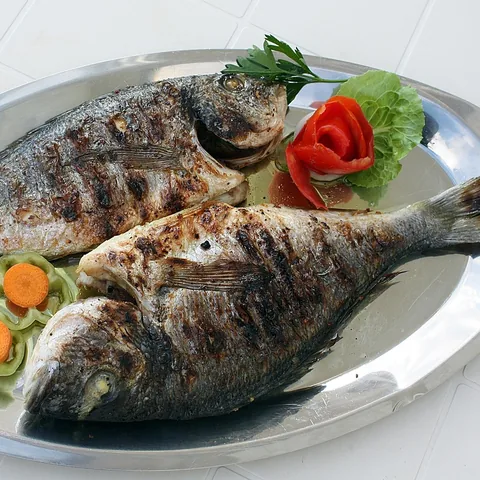
Tambaqui is a big, round freshwater fish of the Amazon with rich, fatty white flesh. In Manaus its thick ribs (costela) or the whole opened fish are seasoned simply with salt, garlic and lime and grilled over charcoal. The fat keeps the meat juicy while the outside picks up smoke and crispness. It is served with rice, farofa, vinaigrette salsa and sometimes baião de dois.
Diets
Allergens
Contains (in a typical recipe):
What it is made of
Recipe
Ingredients
- 1.2 kg tambaqui ribs or 1 whole fish, opened
- 4 garlic cloves, crushed
- 2 limes
- Coarse salt
- For the salsa: 2 tomatoes, 1 onion, 1 green pepper, vinegar
Method
- Rinse the fish and pat dry.
- Rub with garlic, lime juice and salt; rest 30 minutes.
- Prepare a medium charcoal fire.
- Grill skin or bone side down first, about 15–20 minutes.
- Turn carefully and grill the other side 10–15 minutes.
- Dice tomato, onion and pepper with vinegar for the salsa.
- Serve hot with the salsa and rice.
How to make it lighter
- Grill rather than fry; the fish has enough fat of its own.
- Pair with salad and a small portion of farofa.
- Go easy on salt and let lime carry the flavour.
History
Tambaqui has long been one of the most eaten fish in the Amazon, and today much of it comes from fish farms. Grilled tambaqui ribs are a signature dish of restaurants in Manaus.
Count it in one photo
Point your camera at the table — Me Nutrition recognises Grilled tambaqui (Amazon fish) and every other dish, with calories and macros for each. Ate only half? Slide it.
Download on the App StoreSimilar dishes
Values are estimates per 100 g for a typical recipe; home and restaurant versions vary. Diets and allergens are worked out from the ingredients of a typical recipe — always check with whoever cooked the dish. Not medical advice. Nutrition data: Me Nutrition dish database v15. How we count →