
Pan de yuca (Colombian cassava cheese bread)
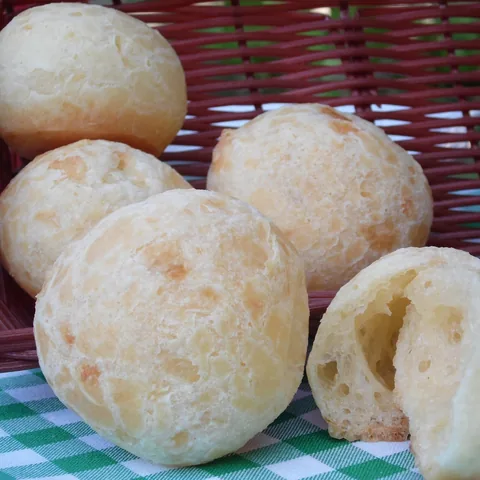
Pan de yuca is a gluten-free bread made from cassava starch kneaded with fresh cheese, egg and a little butter. It is usually shaped into small crescents or horseshoes and baked until lightly golden, with a stretchy, almost elastic chew. Colombians eat it warm with coffee, often with a glass of yogurt or kumis.
Diets
Allergens
Contains (in a typical recipe):
What it is made of
Recipe
Ingredients
- 250 g sweet cassava starch
- 250 g fresh white cheese, finely grated
- 1 egg
- 20 g butter, softened
- 1 tsp baking powder
- 2-4 tbsp milk
- Pinch of salt
Method
- Heat the oven to 210 °C.
- Mix the cassava starch, baking powder and salt.
- Add the cheese, butter and egg and knead well.
- Add milk little by little until the dough is smooth and does not crack.
- Shape into 12 small crescents and place on a lined tray.
- Bake 15-18 minutes until puffed and just golden; eat warm.
How to make it lighter
- Leave out the butter and use a light fresh cheese for fewer calories.
- Pair with plain yogurt and fruit rather than sweet drinks.
- Freeze shaped raw dough and bake only what you need each time.
History
Breads based on cassava starch are found across South America, from Brazilian pão de queijo to Paraguayan chipa. In Colombia, pan de yuca is sold in bakeries and roadside shops nationwide, especially in the southwest.
Count it in one photo
Point your camera at the table — Me Nutrition recognises Pan de yuca (Colombian cassava cheese bread) and every other dish, with calories and macros for each. Ate only half? Slide it.
Download on the App StoreSimilar dishes
Values are estimates per 100 g for a typical recipe; home and restaurant versions vary. Diets and allergens are worked out from the ingredients of a typical recipe — always check with whoever cooked the dish. Not medical advice. Nutrition data: Me Nutrition dish database v15. How we count →