
Colombian fritanga
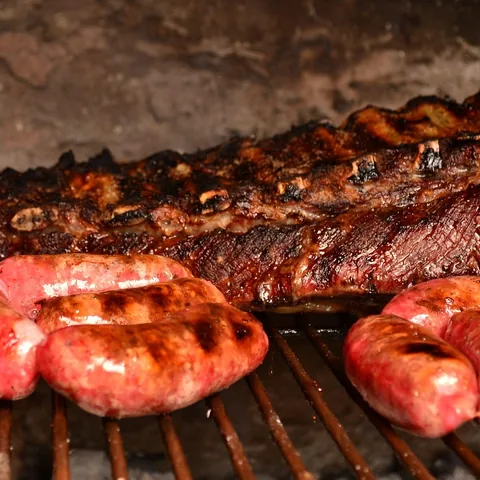
Fritanga is a generous platter meant for sharing, piled with chorizo, morcilla, chicharrón, beef or pork, fried plantain, small yellow potatoes and corn arepas. Everything is crisp and salty, served with lime and hot sauce. People eat it with their hands, often on weekends with family or friends.
Diets
Allergens
Contains (in a typical recipe):
What it is made of
Recipe
Ingredients
- 4 chorizos
- 2 morcillas
- 400 g pork belly
- 300 g beef steak
- 500 g small yellow potatoes
- 2 ripe plantains
- 4 corn arepas
- Oil for frying, lime, salt
Method
- Salt the pork belly and fry slowly until the skin crackles.
- Boil the potatoes in salted water, then fry briefly.
- Grill or pan-fry the chorizos, morcillas and beef.
- Fry plantain slices until golden.
- Toast the arepas on a griddle.
- Cut everything into bite-size pieces and pile on a board with lime.
How to make it lighter
- Grill the meats instead of deep-frying.
- Fill half the board with potatoes and a fresh salad.
- Share one platter among more people.
History
Fritanga is a fixture of Bogotá markets and the roadside restaurants on the way out of the city. It brings together pork products and Andean staples that are common across central Colombia.
Count it in one photo
Point your camera at the table — Me Nutrition recognises Colombian fritanga and every other dish, with calories and macros for each. Ate only half? Slide it.
Download on the App StoreSimilar dishes
Values are estimates per 100 g for a typical recipe; home and restaurant versions vary. Diets and allergens are worked out from the ingredients of a typical recipe — always check with whoever cooked the dish. Not medical advice. Nutrition data: Me Nutrition dish database v15. How we count →