
Cuscuz nordestino (steamed cornmeal cake)
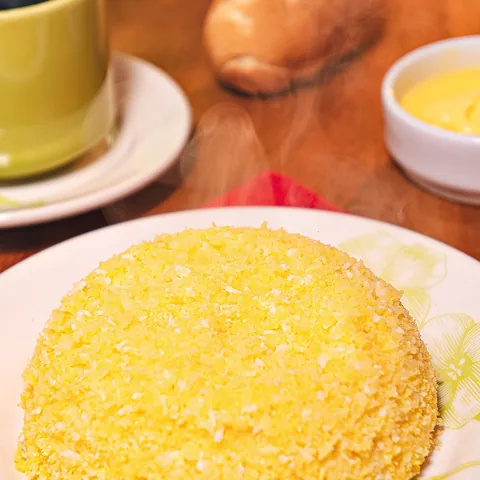
Cuscuz nordestino is the everyday breakfast and supper of the Brazilian Northeast. Flaked cornmeal, called flocão, is moistened with salted water, packed into a special two-part steamer called a cuscuzeira and steamed until it sets into a light, crumbly cake. It tastes of sweet corn and is soft and slightly grainy. It is eaten with butter, fried eggs, queijo coalho, carne de sol or with milk.
Diets
Allergens
Contains (in a typical recipe):
What it is made of
Recipe
Ingredients
- 500 g flaked cornmeal (flocão)
- 350 ml water
- 1 tsp salt
- 20 g butter to serve
- 4 eggs, fried, to serve (optional)
Method
- Mix the cornmeal with the salted water until evenly moist, like damp sand.
- Leave it to rest for 10 minutes so the flakes absorb the water.
- Fill the top of a cuscuzeira loosely without pressing hard.
- Steam over boiling water for 10–15 minutes until firm and fragrant.
- Turn out, slice and serve hot with butter, eggs or cheese.
How to make it lighter
- Plain cuscuz is low in fat; go easy on the butter.
- Pair it with eggs or beans for protein so it keeps you full longer.
- Add grated carrot or spinach to the mixture for extra vegetables.
History
Despite the name, it has nothing to do with North African wheat couscous apart from the word, which came via the Portuguese. In the Northeast it became a corn dish and a daily staple, cooked in almost every home.
Count it in one photo
Point your camera at the table — Me Nutrition recognises Cuscuz nordestino (steamed cornmeal cake) and every other dish, with calories and macros for each. Ate only half? Slide it.
Download on the App StoreSimilar dishes
Values are estimates per 100 g for a typical recipe; home and restaurant versions vary. Diets and allergens are worked out from the ingredients of a typical recipe — always check with whoever cooked the dish. Not medical advice. Nutrition data: Me Nutrition dish database v15. How we count →