
Ceviche de concha (black clam ceviche)
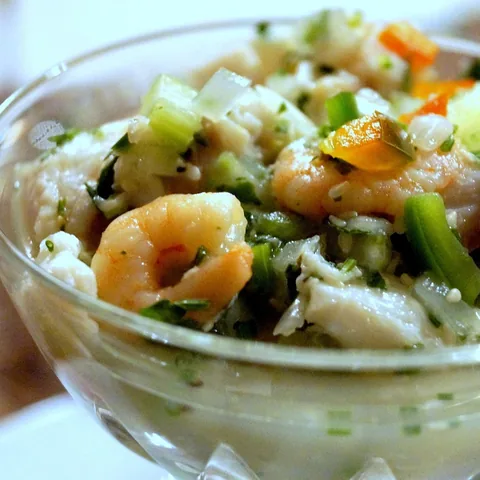
Ceviche de concha is made from conchas negras, small black clams that live in the mangrove mud of northern Ecuador. The clams are opened raw and their dark, briny juice becomes part of the marinade with lime and onion. It tastes intensely of the sea, sharp and a little metallic. People eat it with chifles or toasted corn and often a cold drink.
Diets
Allergens
Contains (in a typical recipe):
What it is made of
Recipe
Ingredients
- 50 black clams, very fresh
- 1 red onion, finely chopped
- 120 ml lime juice
- 1 tomato, diced
- 1 small chili, minced
- cilantro, salt
Method
- Scrub the clams well under cold running water.
- Open them with a small knife over a bowl, saving all the dark juice.
- Rinse the onion in salted water and drain.
- Combine clams, their juice, lime juice, onion, tomato and chili; season with salt.
- Rest for 10 minutes, add cilantro and serve at once with toasted corn.
How to make it lighter
- Buy clams only from trusted sellers and eat them the same day.
- Pregnant women and people with weak immunity should avoid raw shellfish.
- Pair with toasted corn rather than fried plantain to keep it light.
History
Black clams have long been gathered by hand in the mangroves of Esmeraldas and El Oro. Many Ecuadorians consider this ceviche a restorative and a reputed aphrodisiac. Because the clams are eaten raw, freshness is essential.
Count it in one photo
Point your camera at the table — Me Nutrition recognises Ceviche de concha (black clam ceviche) and every other dish, with calories and macros for each. Ate only half? Slide it.
Download on the App StoreSimilar dishes
Values are estimates per 100 g for a typical recipe; home and restaurant versions vary. Diets and allergens are worked out from the ingredients of a typical recipe — always check with whoever cooked the dish. Not medical advice. Nutrition data: Me Nutrition dish database v15. How we count →