
Viche de pescado (fish and peanut soup)
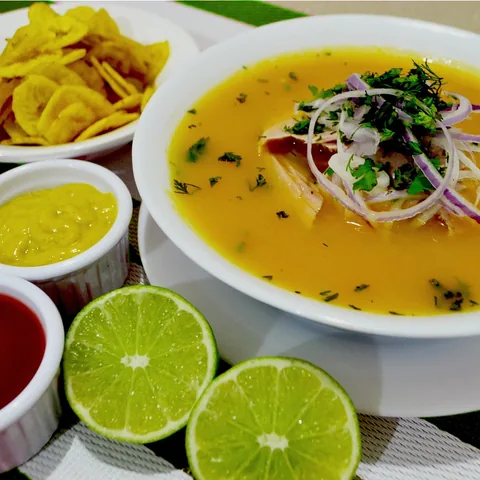
Viche is a hearty soup from Manabí in which fish, shrimp and sometimes crab or clams are simmered in a broth thickened with raw ground peanuts and grated green plantain. Chunks of corn on the cob, cassava, squash and sweet plantain make it a full meal. The taste is nutty, creamy and of the sea. It is often eaten with a squeeze of lime and a little ají.
Diets
Allergens
Contains (in a typical recipe):
What it is made of
Recipe
Ingredients
- 600 g white fish in chunks
- 300 g shrimp
- 150 g raw peanuts, ground
- 1 green plantain, grated
- 2 corn cobs, cut in pieces
- 300 g cassava, 300 g squash
- 1 onion, 1 pepper, 3 garlic cloves
- achiote, cumin, cilantro, salt
Method
- Sauté onion, pepper and garlic with achiote and cumin in a large pot.
- Add 2 litres of water, the corn, cassava and squash and simmer 20 minutes.
- Mix the ground peanuts with some water and stir into the pot.
- Add the grated plantain little by little, stirring, and cook 10 minutes until thickened.
- Add the fish and shrimp and cook 5-7 minutes.
- Finish with cilantro and serve with lime.
How to make it lighter
- The soup is already a full meal; skip extra rice.
- Use less peanut and more plantain for fewer calories.
- Choose lean white fish and plenty of vegetables.
History
Manabí is known for cooking with peanuts, which grow well in the province, and viche is one of its emblematic dishes. It is also popular during Lent as a meatless meal. Versions differ between fishing towns depending on the catch.
Count it in one photo
Point your camera at the table — Me Nutrition recognises Viche de pescado (fish and peanut soup) and every other dish, with calories and macros for each. Ate only half? Slide it.
Download on the App StoreSimilar dishes
Values are estimates per 100 g for a typical recipe; home and restaurant versions vary. Diets and allergens are worked out from the ingredients of a typical recipe — always check with whoever cooked the dish. Not medical advice. Nutrition data: Me Nutrition dish database v15. How we count →