
Fanesca (Ecuadorian Easter soup)
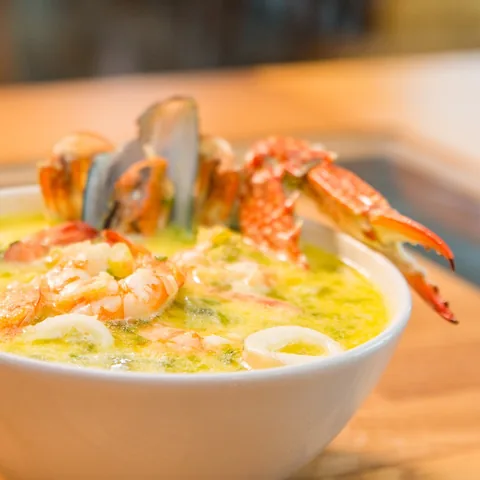
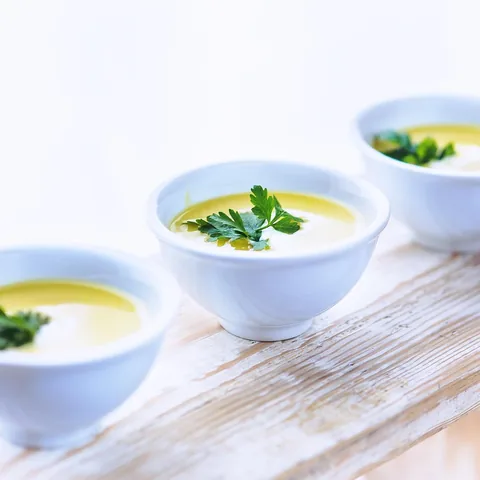
Fanesca is a thick, creamy soup traditionally made with a dozen different beans and grains, squash, milk and salt cod. It tastes mildly sweet and savoury at once, with a nutty depth from ground peanuts. Bowls are crowned with hard-boiled egg, fried plantain, small empanadas and herbs. It is a festive meal shared with family during Holy Week.
Diets
Allergens
Contains (in a typical recipe):
What it is made of
Recipe
Ingredients
- 400 g salt cod, soaked overnight
- 500 g pumpkin or squash
- 200 g fava beans
- 200 g corn kernels
- 150 g peas
- 100 g cooked rice
- 1 l milk
- 60 g ground peanuts
- 1 onion, 2 garlic cloves
- 4 hard-boiled eggs to garnish
Method
- Simmer the soaked cod in some of the milk for 10 minutes, then flake it and keep the liquid.
- Cook the squash until soft and blend it with a little water.
- Sauté onion and garlic, add the beans, corn and peas and cook for 15 minutes.
- Add the squash purée, the remaining milk, the cod milk, rice and ground peanuts.
- Simmer gently for 20 minutes, stirring, then fold in the flaked cod.
- Serve hot topped with sliced egg, fried plantain and parsley.
How to make it lighter
- Use semi-skimmed milk and skip the fried garnishes for a lighter bowl.
- Soak the cod well and change the water several times to reduce salt.
- A small bowl is very filling: pair it with a green salad rather than bread.
History
Fanesca is eaten only around Easter, when Catholic tradition avoids red meat, which explains the salt cod. The twelve grains are often linked to the twelve apostles. Families usually cook it in large batches and share it with relatives and neighbours.
Count it in one photo
Point your camera at the table — Me Nutrition recognises Fanesca (Ecuadorian Easter soup) and every other dish, with calories and macros for each. Ate only half? Slide it.
Download on the App StoreSimilar dishes
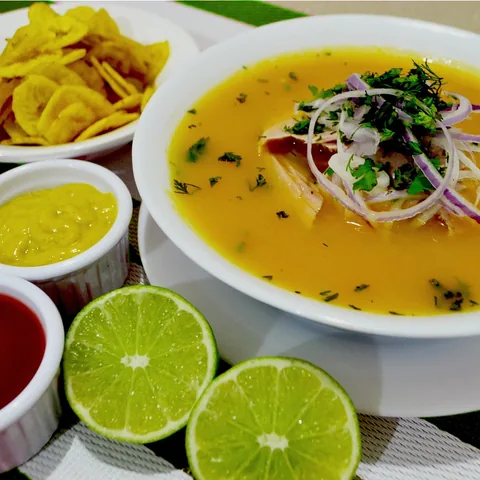
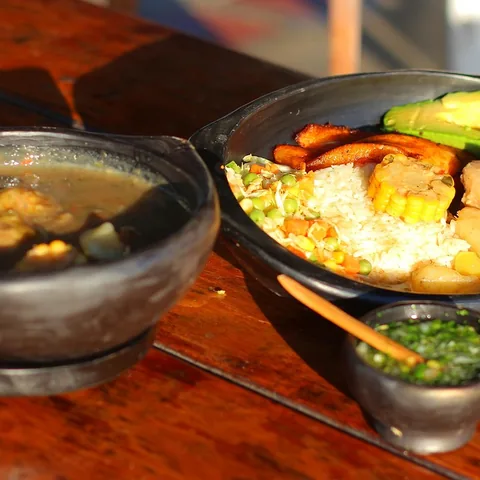
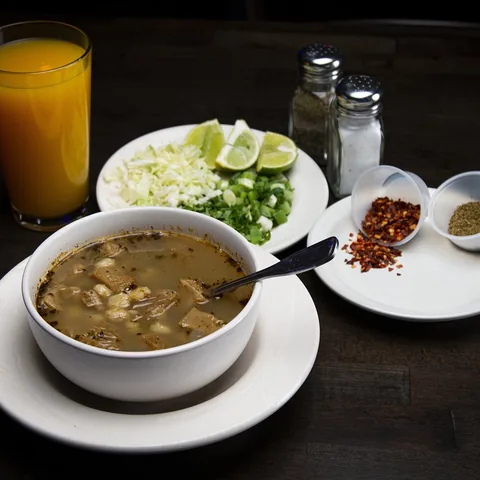
Values are estimates per 100 g for a typical recipe; home and restaurant versions vary. Diets and allergens are worked out from the ingredients of a typical recipe — always check with whoever cooked the dish. Not medical advice. Nutrition data: Me Nutrition dish database v15. How we count →