
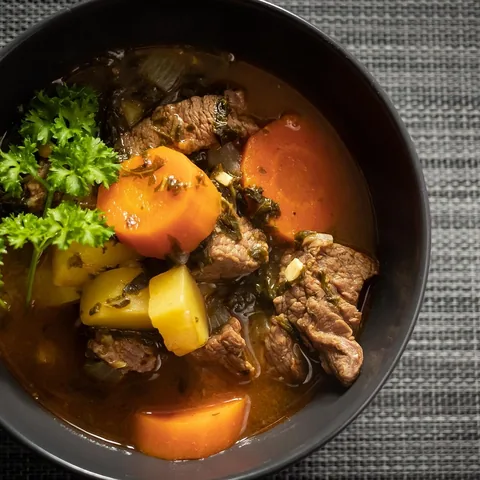
Bozbashi (lamb and chickpea soup)
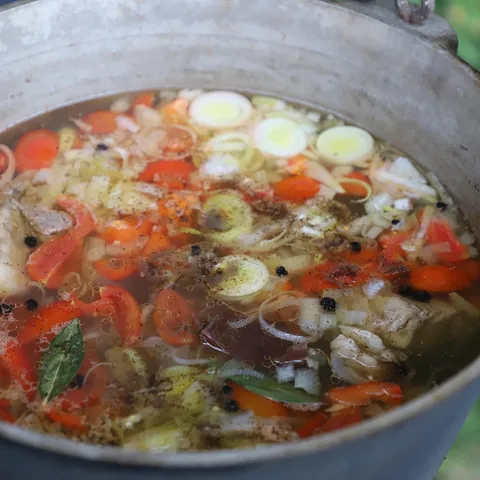
Bozbashi is a filling soup of lamb on the bone simmered with chickpeas until tender, then finished with potatoes, onion and tomato. Herbs such as coriander, mint or dill give freshness to the rich broth. It is eaten as a meal in itself, often with bread on cold days.
Diets
Allergens
None of the 14 major allergens in a typical recipe.
What it is made of
Recipe
Ingredients
- 800 g lamb on the bone
- 200 g dried chickpeas, soaked overnight
- 3 potatoes
- 2 onions
- 3 tomatoes
- 30 g coriander, 10 g mint
- salt, pepper, turmeric (optional)
Method
- Simmer the lamb and drained chickpeas in 3 litres of water, skimming, for about 1.5 hours.
- Add diced potatoes and cook 15 minutes.
- Sauté the chopped onions and add them to the soup with chopped tomatoes.
- Season with salt, pepper and turmeric if using.
- Simmer 10 more minutes until everything is soft.
- Stir in chopped herbs and serve.
How to make it lighter
- Skim off the fat once the broth has cooled a little.
- Use more chickpeas and less meat for extra fibre.
- Swap some potatoes for carrots or courgette.
History
Bozbash soups are shared across the South Caucasus, with Azerbaijani and Armenian versions as well as Georgian ones. The Georgian style usually leans on fresh herbs and sometimes adds sour fruit.
Count it in one photo
Point your camera at the table — Me Nutrition recognises Bozbashi (lamb and chickpea soup) and every other dish, with calories and macros for each. Ate only half? Slide it.
Download on the App StoreSimilar dishes
Values are estimates per 100 g for a typical recipe; home and restaurant versions vary. Diets and allergens are worked out from the ingredients of a typical recipe — always check with whoever cooked the dish. Not medical advice. Nutrition data: Me Nutrition dish database v15. How we count →