
Ojakhuri (pork with fried potatoes)
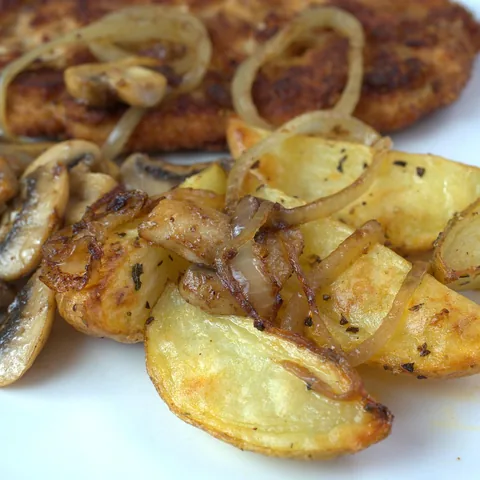
Ojakhuri means family style, and it is exactly that: chunks of pork fried until browned, then tossed with golden fried potatoes and onions. It is seasoned with garlic, coriander, khmeli-suneli and fresh herbs, sometimes with a few tomatoes or peppers. In restaurants it arrives sizzling in a clay ketsi and is eaten with bread, pickles and tkemali.
Diets
Allergens
None of the 14 major allergens in a typical recipe.
What it is made of
Recipe
Ingredients
- 700 g pork neck or shoulder
- 800 g potatoes
- 2 onions (200 g)
- 4 garlic cloves
- 1 tsp khmeli-suneli
- 1 tsp ground coriander
- 4 tbsp sunflower oil (50 ml)
- a bunch of cilantro and dill
Method
- Cut the pork into chunks, season and fry in a hot pan until browned and cooked through.
- Fry the potato wedges separately in oil until golden.
- Add sliced onion to the pork and cook until soft.
- Combine the pork and potatoes, add garlic, coriander and khmeli-suneli and toss for 2 minutes.
- Serve hot, scattered with herbs, in a heated clay dish.
How to make it lighter
- Roast the potatoes in the oven with a little oil instead of frying them.
- Use pork loin or tenderloin instead of fatty neck.
- Add peppers and tomatoes to increase the vegetable share.
History
Ojakhuri is a classic of everyday Georgian home cooking and a fixture on almost every restaurant menu in the country. Versions with chicken or beef also exist.
Count it in one photo
Point your camera at the table — Me Nutrition recognises Ojakhuri (pork with fried potatoes) and every other dish, with calories and macros for each. Ate only half? Slide it.
Download on the App StoreSimilar dishes
Values are estimates per 100 g for a typical recipe; home and restaurant versions vary. Diets and allergens are worked out from the ingredients of a typical recipe — always check with whoever cooked the dish. Not medical advice. Nutrition data: Me Nutrition dish database v15. How we count →