
Kalakuri khinkali (city-style dumplings)
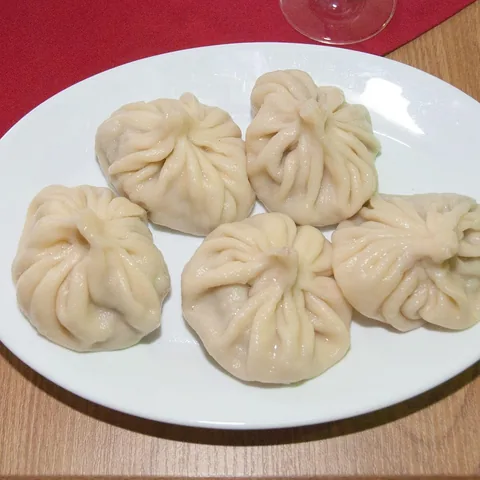
Kalakuri khinkali are the Tbilisi take on Georgia's famous pleated dumplings. Unlike the plainer mountain version, the meat filling is generously mixed with cilantro, parsley and onion, so the broth inside tastes green and peppery. They are held by the knotted top, bitten carefully to sip the juice, and eaten with plenty of black pepper.
Diets
Allergens
Contains (in a typical recipe):
What it is made of
Recipe
Ingredients
- 500 g plain flour
- 250 ml water
- 300 g minced beef
- 200 g minced pork
- 2 onions, finely chopped
- 1 bunch cilantro and a few sprigs of parsley
- 150 ml cold water for the filling, salt, black pepper
Method
- Knead the flour, water and a pinch of salt into a firm dough and let it rest for 30 minutes.
- Mix the meats with onion, chopped herbs, salt and pepper, then work in the cold water until the filling is loose and juicy.
- Roll the dough thin and cut circles about 10 cm across.
- Place a spoonful of filling in the centre and gather the edges into many small pleats, twisting them into a knot on top.
- Boil in plenty of salted water for 10-12 minutes until they float and the dough is cooked.
- Serve hot with freshly ground black pepper.
How to make it lighter
- Use lean beef and a smaller share of pork to cut the fat.
- Leave the thick knotted top on the plate – it is mostly dough.
- Serve with a large herb and vegetable salad and keep the portion to 4-5 pieces.
History
Khinkali came down from the mountain regions of eastern Georgia, where the filling was usually just meat, onion and spices. As the dish spread to the capital, cooks began adding fresh herbs, and this herb-rich style became known as 'kalakuri', meaning 'of the city'.
Count it in one photo
Point your camera at the table — Me Nutrition recognises Kalakuri khinkali (city-style dumplings) and every other dish, with calories and macros for each. Ate only half? Slide it.
Download on the App StoreSimilar dishes
Values are estimates per 100 g for a typical recipe; home and restaurant versions vary. Diets and allergens are worked out from the ingredients of a typical recipe — always check with whoever cooked the dish. Not medical advice. Nutrition data: Me Nutrition dish database v15. How we count →