
Ghanaian jollof rice
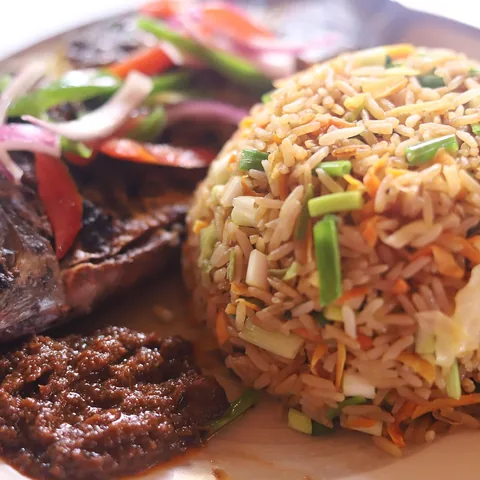
Ghanaian jollof is a one-pot rice cooked in a rich tomato, onion and pepper base until each grain is red-orange and fragrant. It is often made with jasmine or basmati-style rice and has a slight smoky edge from the bottom of the pot. It tastes spicy and savoury. It is served with grilled chicken, fried plantain, salad or shito.
Diets
Allergens
None of the 14 major allergens in a typical recipe.
What it is made of
Recipe
Ingredients
- 450 g jasmine rice
- 500 g tomatoes
- 70 g tomato paste
- 200 g onion
- 5 g scotch bonnet pepper
- 600 g chicken pieces
- 80 g vegetable oil
Method
- Blend tomatoes, onion and scotch bonnet into a smooth sauce.
- Fry sliced onion in oil, add tomato paste and cook until dark.
- Pour in the blended sauce and cook down until the oil rises.
- Add washed rice, stock and spices, cover tightly and steam on low heat 30 minutes.
- Serve with grilled or fried chicken.
How to make it lighter
- Measure the oil and use skinless grilled chicken.
- Add carrots and peas to raise the vegetables.
- Serve with a large salad to balance the rice.
History
Jollof is shared across West Africa, and Ghanaians proudly claim their version in a friendly rivalry with neighbours. The dish is linked to the rice traditions of Senegambia and is now a fixture at Ghanaian celebrations.
Count it in one photo
Point your camera at the table — Me Nutrition recognises Ghanaian jollof rice and every other dish, with calories and macros for each. Ate only half? Slide it.
Download on the App StoreSimilar dishes
Values are estimates per 100 g for a typical recipe; home and restaurant versions vary. Diets and allergens are worked out from the ingredients of a typical recipe — always check with whoever cooked the dish. Not medical advice. Nutrition data: Me Nutrition dish database v15. How we count →