
Red red (Ghanaian bean stew with fried plantain)
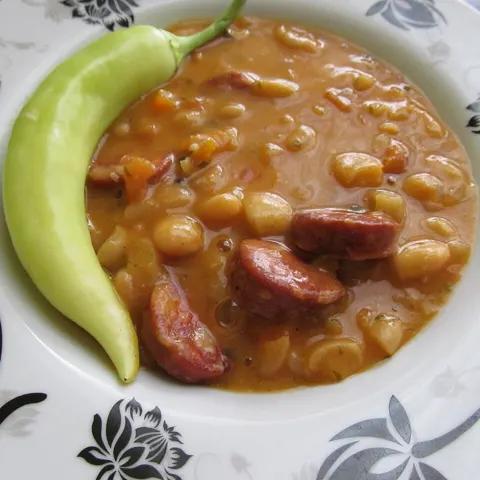
Red red is a bean stew named for its two reds: the red palm oil and the red tomato sauce. Black-eyed peas simmer until creamy in a spiced base of onion, ginger and pepper. It tastes earthy, smoky and a little sweet next to golden fried ripe plantain. It is often eaten at lunch and sold in street stalls.
Diets
Allergens
None of the 14 major allergens in a typical recipe.
What it is made of
Recipe
Ingredients
- 300 g black-eyed peas
- 70 g red palm oil
- 400 g ripe plantain
- 300 g tomatoes
- 150 g onion
- 5 g scotch bonnet pepper
Method
- Soak black-eyed peas for 4 hours, then boil 40 minutes until soft.
- Heat palm oil, fry onion, ginger and pepper for 8 minutes.
- Add tomato and cook until thick.
- Stir in the beans and simmer for 15 minutes, mashing a few.
- Fry ripe plantain slices and serve alongside.
How to make it lighter
- Bake plantain slices instead of deep-frying.
- Reduce the palm oil by a third.
- Add gari for more fibre and a crunchy contrast.
History
Red red is a popular Ghanaian dish eaten across the country and is easily made vegan. The beans, called ewa in some regional cooking, are a staple protein for many families.
Count it in one photo
Point your camera at the table — Me Nutrition recognises Red red (Ghanaian bean stew with fried plantain) and every other dish, with calories and macros for each. Ate only half? Slide it.
Download on the App StoreSimilar dishes

Values are estimates per 100 g for a typical recipe; home and restaurant versions vary. Diets and allergens are worked out from the ingredients of a typical recipe — always check with whoever cooked the dish. Not medical advice. Nutrition data: Me Nutrition dish database v15. How we count →