
Palm nut soup (Abenkwan)
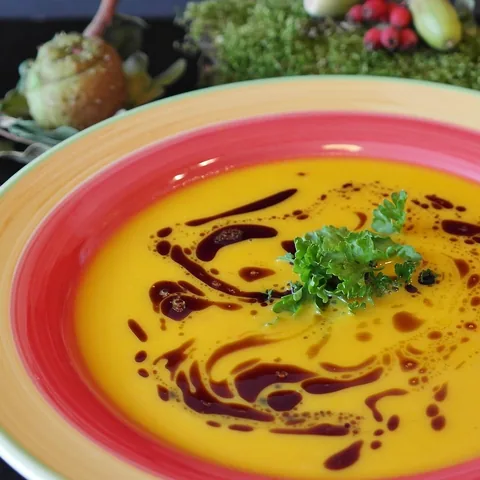
Abenkwan is a deep red, velvety soup made from the pulp of palm fruits. It tastes nutty, savoury and mildly smoky, with goat meat, smoked fish and garden eggs in the broth. The soup thickens and the orange oil rises to the top as it cooks. It is served with fufu, rice balls or boiled rice.
Diets
Allergens
Contains (in a typical recipe):
What it is made of
Recipe
Ingredients
- 400 g palm fruit pulp (or palm nut concentrate)
- 600 g goat meat
- 100 g smoked fish
- 150 g garden eggs (African eggplants)
- 300 g tomatoes
- 150 g onion
Method
- Boil palm fruits for 25 minutes, then pound and strain with warm water to get a thick liquid.
- Season goat meat with onion and salt and simmer for 30 minutes.
- Add blended tomato, pepper and the palm fruit liquid.
- Add garden eggs and smoked fish and simmer 30 minutes.
- Serve hot with fufu or rice.
How to make it lighter
- Skim off excess oil before serving.
- Use lean meat and more fish and garden eggs.
- Keep the portion of starch beside it moderate.
History
Palm nut soup is a long-standing dish of the Akan people of Ghana, where oil palms grow widely. Similar palm soups are found across West Africa under different names.
Count it in one photo
Point your camera at the table — Me Nutrition recognises Palm nut soup (Abenkwan) and every other dish, with calories and macros for each. Ate only half? Slide it.
Download on the App StoreSimilar dishes
Values are estimates per 100 g for a typical recipe; home and restaurant versions vary. Diets and allergens are worked out from the ingredients of a typical recipe — always check with whoever cooked the dish. Not medical advice. Nutrition data: Me Nutrition dish database v15. How we count →