
Gujarati kadhi (sweet-sour yogurt curry)
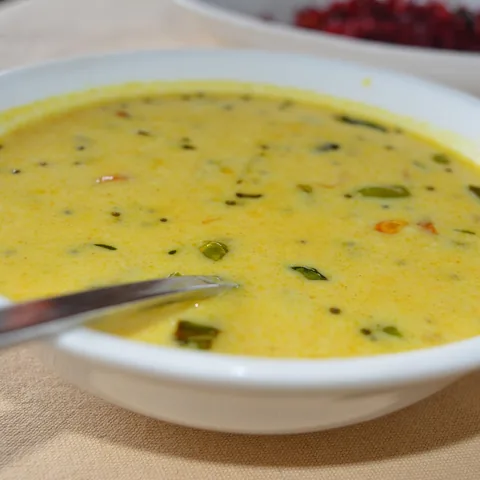
Gujarati kadhi is a thin, pale yellow curry of yogurt thickened with a little gram flour. Unlike northern versions it has no fritters and a touch of sugar or jaggery, so it tastes sweet, sour and gently spiced. A tempering of ghee, mustard seeds, cloves and curry leaves is poured on top. It is drunk or spooned over rice as part of a thali.
Diets
Allergens
Contains (in a typical recipe):
What it is made of
Recipe
Ingredients
- 300 g plain yogurt
- 2 tbsp gram flour (20 g)
- 600 ml water
- 1 tbsp sugar, 1 tsp grated ginger, 2 green chillies
- 1 tbsp ghee (15 g), 1 tsp mustard seeds, 4 cloves
- 10 curry leaves, salt
Method
- Whisk the yogurt, gram flour, water, sugar and salt until completely smooth.
- Pour into a pot with ginger and chillies and bring to a boil, stirring constantly.
- Simmer on low for 15 minutes until slightly thickened.
- Heat the ghee and fry mustard seeds, cloves and curry leaves until they pop.
- Pour the tempering over the kadhi and serve with rice or khichdi.
How to make it lighter
- Use low-fat yogurt to lighten it.
- Use half the ghee.
- Serve with a vegetable-rich thali instead of fried sides.
History
Kadhi is made across India in many styles, and the Gujarati one is known for its sweetness and its thin, almost soup-like consistency. It is a regular part of the traditional Gujarati thali.
Count it in one photo
Point your camera at the table — Me Nutrition recognises Gujarati kadhi (sweet-sour yogurt curry) and every other dish, with calories and macros for each. Ate only half? Slide it.
Download on the App StoreSimilar dishes
Values are estimates per 100 g for a typical recipe; home and restaurant versions vary. Diets and allergens are worked out from the ingredients of a typical recipe — always check with whoever cooked the dish. Not medical advice. Nutrition data: Me Nutrition dish database v15. How we count →