
Hervido de gallina (Venezuelan hen soup)
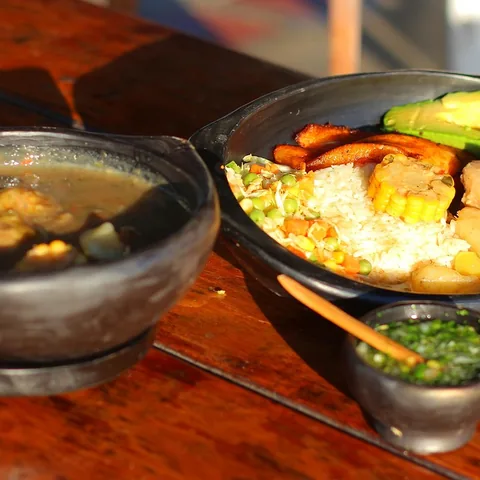
Hervido de gallina is a clear but substantial soup of hen simmered with cassava, ocumo, corn, carrot and potato, flavoured with leek, celery and fresh cilantro. A free-range hen gives a deep golden broth and firm meat that needs long cooking. It is the soup Venezuelans reach for when someone is ill, tired or after a long night, and it is eaten with arepas on the side.
Diets
Allergens
None of the 14 major allergens in a typical recipe.
What it is made of
Recipe
Ingredients
- 1 hen or 1.2 kg chicken pieces
- 3 l water
- 400 g cassava, 300 g ocumo or taro
- 2 corn cobs, 2 carrots, 2 potatoes
- 1 leek, 1 celery stalk, 1 onion, 3 garlic cloves
- 30 g cilantro, salt, pepper
Method
- Put the hen in cold water with onion, leek, celery and garlic, bring to a simmer and skim.
- Cook 1–1.5 hours for a hen (45 minutes for chicken) until the meat is tender.
- Add the corn in chunks and the cassava; cook 15 minutes.
- Add the ocumo, carrot and potato and cook 20–25 minutes more.
- Season, add plenty of chopped cilantro and serve with a piece of hen in each bowl.
How to make it lighter
- Chill the broth and lift off the fat before reheating.
- Fill the pot with more carrot and less cassava for fewer carbs.
- Skip the side arepa – the roots already make it filling.
History
In Venezuela the words hervido and sancocho are often used for very similar soups, with hervido more common in some regions. Hen soups with roots and corn have long been everyday home cooking across the country.
Count it in one photo
Point your camera at the table — Me Nutrition recognises Hervido de gallina (Venezuelan hen soup) and every other dish, with calories and macros for each. Ate only half? Slide it.
Download on the App StoreSimilar dishes

Values are estimates per 100 g for a typical recipe; home and restaurant versions vary. Diets and allergens are worked out from the ingredients of a typical recipe — always check with whoever cooked the dish. Not medical advice. Nutrition data: Me Nutrition dish database v15. How we count →