
Mondongo venezolano (Venezuelan tripe soup)
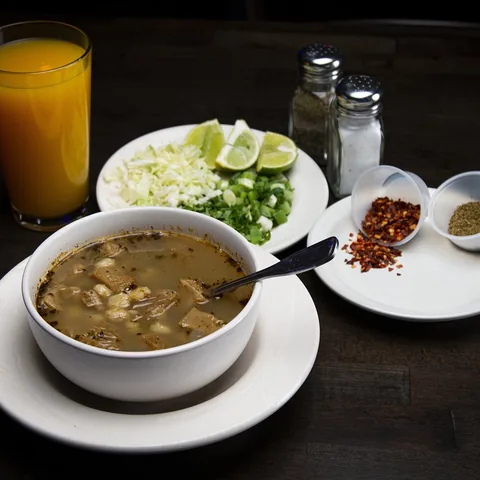
Venezuelan mondongo is a thick, comforting soup of beef tripe cooked slowly until soft, then simmered with chickpeas, potato, carrot, pumpkin, corn and a sofrito of onion, pepper and garlic, finished with cilantro. The tripe becomes tender and slightly chewy, and the vegetables thicken the broth into something between a soup and a stew. It is a weekend lunch in many homes and is often served with avocado and arepas.
Diets
Allergens
None of the 14 major allergens in a typical recipe.
What it is made of
Recipe
Ingredients
- 1 kg beef tripe, well cleaned
- 2 limes for washing
- 250 g cooked chickpeas
- 400 g potatoes, 2 carrots, 300 g pumpkin
- 2 corn cobs in chunks
- 1 onion, 1 red pepper, 4 garlic cloves, 2 tomatoes
- 30 g cilantro, cumin, salt
Method
- Rub the tripe with lime and salt, rinse well and boil in fresh water for 2–3 hours (or 45 minutes in a pressure cooker) until tender.
- Drain, cut into small strips and return to a pot with 2.5 l of fresh water.
- Fry onion, pepper, garlic and tomato into a sofrito and add it to the pot with cumin.
- Add the corn, potatoes, carrots and pumpkin and simmer 25 minutes.
- Add the chickpeas and cook 10 minutes more, then season and finish with cilantro.
How to make it lighter
- Trim all visible fat from the tripe before cooking.
- Add more pumpkin and carrot and fewer potatoes.
- Tripe is low in fat but high in cholesterol – keep portions moderate.
History
Tripe soups came to Latin America from Spanish cooking and took different forms in each country. In Venezuela mondongo is a classic of popular restaurants and family Sundays, and is traditionally credited with reviving people after late nights.
Count it in one photo
Point your camera at the table — Me Nutrition recognises Mondongo venezolano (Venezuelan tripe soup) and every other dish, with calories and macros for each. Ate only half? Slide it.
Download on the App StoreSimilar dishes
Values are estimates per 100 g for a typical recipe; home and restaurant versions vary. Diets and allergens are worked out from the ingredients of a typical recipe — always check with whoever cooked the dish. Not medical advice. Nutrition data: Me Nutrition dish database v15. How we count →