
Huauzontles (cheese-stuffed greens fritters)
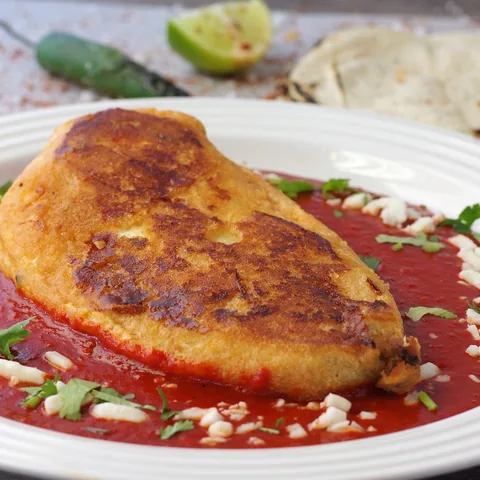
Huauzontle is a leafy plant with clusters of tiny flower buds, related to quinoa. The tops are boiled, pressed around a piece of fresh cheese, dipped in whipped egg and fried until golden. They are then simmered briefly in a light tomato sauce, giving a soft, cheesy fritter with a green, slightly broccoli-like taste.
Diets
Allergens
Contains (in a typical recipe):
What it is made of
Recipe
Ingredients
- 500 g huauzontle tops
- 200 g Oaxaca or fresh cheese, in sticks
- 4 eggs, separated
- 40 g flour for dusting
- Oil for shallow frying
- 500 g tomatoes
- 1/4 onion, 1 garlic clove
- 300 ml vegetable broth
Method
- Boil the huauzontle tops in salted water for 8 minutes, drain and squeeze dry.
- Gather small bunches around a stick of cheese and press firmly; dust with flour.
- Whip the egg whites to stiff peaks, then fold in the yolks.
- Dip each bundle in the egg and fry in hot oil until golden on both sides; drain on paper.
- Blend the tomatoes, onion and garlic, simmer with the broth for 10 minutes and warm the fritters in the sauce.
How to make it lighter
- Bake the battered bundles in a hot oven instead of frying to save fat.
- Use a lower-fat fresh cheese like panela.
- Serve two fritters with plenty of sauce and a salad instead of rice.
History
Huauzontle has been eaten in central Mexico since pre-Hispanic times. Battered huauzontles are a traditional dish for Lent and Holy Week, when many families avoid meat.
Count it in one photo
Point your camera at the table — Me Nutrition recognises Huauzontles (cheese-stuffed greens fritters) and every other dish, with calories and macros for each. Ate only half? Slide it.
Download on the App StoreSimilar dishes
Values are estimates per 100 g for a typical recipe; home and restaurant versions vary. Diets and allergens are worked out from the ingredients of a typical recipe — always check with whoever cooked the dish. Not medical advice. Nutrition data: Me Nutrition dish database v15. How we count →