
Jangjorim (soy-braised beef)
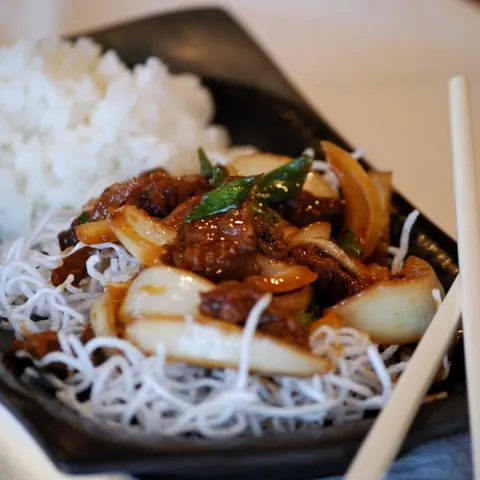
Jangjorim is a classic banchan of lean beef simmered slowly in sweet soy sauce until it can be torn into strips. Hard-boiled eggs and sometimes garlic or chili peppers soak in the same sauce. It is salty-sweet and keeps for days, so it is a lunchbox favorite eaten with rice.
Diets
Allergens
Contains (in a typical recipe):
What it is made of
Recipe
Ingredients
- 600 g beef shank or brisket
- 6 hard-boiled eggs
- 100 ml soy sauce
- 2 tbsp sugar (25 g)
- 8 garlic cloves
- 20 g ginger
- 1 onion (150 g)
Method
- Soak the beef in cold water for 30 minutes to draw out blood.
- Boil it with onion and ginger in 1 litre of water for 40 minutes.
- Remove the beef and keep 400 ml of broth.
- Simmer the broth with soy sauce, sugar, garlic and the beef for 20 minutes.
- Add the peeled eggs and cook 10 minutes, then tear the beef into strips.
How to make it lighter
- Use less sugar and low-sodium soy sauce.
- Choose lean shank and skim any fat off the broth.
- Serve small portions as a flavorful side, with extra vegetables.
History
The word jorim means to braise down in seasoning, and this is one of the best-known examples. Because the strong sauce preserves the meat, it was practical for Korean households before refrigeration.
Count it in one photo
Point your camera at the table — Me Nutrition recognises Jangjorim (soy-braised beef) and every other dish, with calories and macros for each. Ate only half? Slide it.
Download on the App StoreSimilar dishes
Values are estimates per 100 g for a typical recipe; home and restaurant versions vary. Diets and allergens are worked out from the ingredients of a typical recipe — always check with whoever cooked the dish. Not medical advice. Nutrition data: Me Nutrition dish database v15. How we count →