
Tandyr nan (Kazakh tandoor bread)
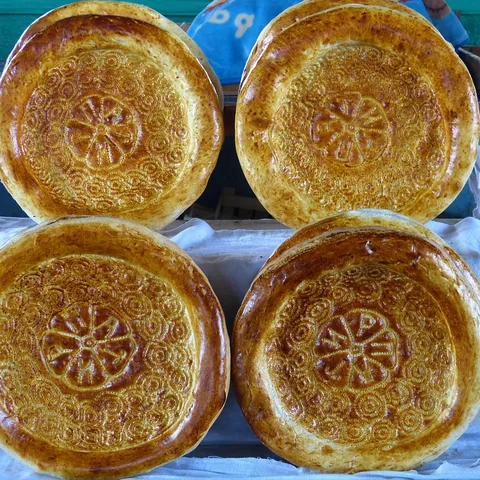
Tandyr nan is a round yeast bread with a thick, puffy rim and a thin, pricked centre, baked by pressing the dough against the wall of a hot clay oven. The crust is crisp and slightly smoky, the inside soft and chewy, often with sesame or nigella on top. It is torn by hand and served with tea, soups and grilled meat.
Diets
Allergens
Contains (in a typical recipe):
What it is made of
Recipe
Ingredients
- 500 g flour
- 7 g dry yeast
- 300 ml warm water
- 2 tbsp oil
- 1 tsp salt
- 1 tbsp sesame seeds
Method
- Mix flour, yeast, salt, water and oil into a smooth dough and knead for 10 minutes.
- Leave covered for 1.5 hours until doubled.
- Divide into 3 balls and flatten into discs with a thicker rim.
- Prick the centres with a fork, brush with water and sprinkle with sesame.
- Bake on the tandoor wall, or on a hot stone at 250 °C for 10-12 minutes, until golden.
How to make it lighter
- Replace a third of the flour with wholemeal for more fibre.
- Eat it with vegetable soups rather than fatty meat.
- Freeze extra breads and warm them as needed to avoid overeating.
History
Tandoor baking spread through Central Asia from the oasis towns of the south, and round flatbreads are a staple across the region. In Kazakh homes bread is treated with great respect and is never placed upside down or thrown away.
Count it in one photo
Point your camera at the table — Me Nutrition recognises Tandyr nan (Kazakh tandoor bread) and every other dish, with calories and macros for each. Ate only half? Slide it.
Download on the App StoreSimilar dishes


Values are estimates per 100 g for a typical recipe; home and restaurant versions vary. Diets and allergens are worked out from the ingredients of a typical recipe — always check with whoever cooked the dish. Not medical advice. Nutrition data: Me Nutrition dish database v15. How we count →