
Kulebyaka (Russian layered fish pie)
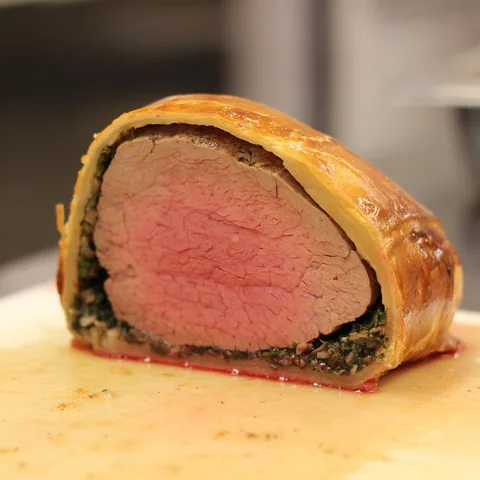
Kulebyaka is a large oblong pie in which several fillings are stacked in layers inside yeast or puff pastry, most often salmon or sturgeon, rice or buckwheat, chopped egg, onion and dill. Each slice shows neat stripes of filling and tastes rich, buttery and savoury. It is a festive dish, served warm in slices with melted butter or a light sauce.
Diets
Allergens
Contains (in a typical recipe):
What it is made of
Recipe
Ingredients
- 500 g yeast or puff pastry
- 500 g salmon fillet
- 150 g rice
- 4 eggs (plus 1 for glazing)
- 1 onion (100 g)
- 60 g butter
- 1 bunch dill
- salt, pepper
Method
- Boil the rice and 4 eggs; chop the eggs and mix with chopped dill.
- Soften the chopped onion in half of the butter and stir it into the rice; season.
- Cut the salmon into pieces and season.
- Roll out the pastry into a long rectangle and layer rice, salmon and egg along the centre.
- Fold the pastry over to close, seal the seams and place seam-side down on a tray.
- Make a few cuts on top, brush with beaten egg and bake at 190 °C for 40-45 minutes.
- Brush with the remaining melted butter, rest 15 minutes and slice.
How to make it lighter
- Use a thin yeast dough rather than puff pastry to cut the fat.
- Add more rice, greens or spinach and keep the slice moderate.
- Serve with a large green salad instead of extra butter.
History
Kulebyaka has been part of Russian festive cooking for centuries and is often mentioned in classic Russian literature as a symbol of generous hospitality. The French adapted it in the 19th century as coulibiac, usually with salmon.
Count it in one photo
Point your camera at the table — Me Nutrition recognises Kulebyaka (Russian layered fish pie) and every other dish, with calories and macros for each. Ate only half? Slide it.
Download on the App StoreSimilar dishes
Values are estimates per 100 g for a typical recipe; home and restaurant versions vary. Diets and allergens are worked out from the ingredients of a typical recipe — always check with whoever cooked the dish. Not medical advice. Nutrition data: Me Nutrition dish database v15. How we count →