
Kurnik (Russian domed chicken pie)
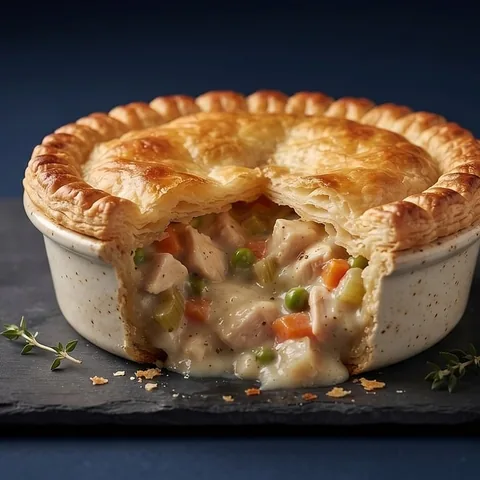
Kurnik is an impressive dome-shaped pie in which several fillings, usually chicken, rice, mushrooms and chopped egg with dill, are stacked in layers. Thin pancakes are placed between the layers so the flavours stay separate, and everything is enclosed in a rich short or yeast pastry. It is cut into wedges and served warm on big family occasions.
Diets
Allergens
Contains (in a typical recipe):
What it is made of
Recipe
Ingredients
- Pastry: 500 g flour, 200 g butter, 150 ml sour cream, 1 egg, salt
- 8 thin pancakes (blini)
- 600 g chicken (thighs and breast), cooked
- 400 g mushrooms
- 150 g rice, cooked
- 4 hard-boiled eggs
- 1 onion (100 g)
- 1 bunch dill, salt, pepper
- 1 egg for glazing
Method
- Rub the flour with cold butter, add sour cream, egg and salt, knead and chill 30 minutes.
- Fry the mushrooms with onion; dice the chicken; chop the eggs with dill; season everything.
- Roll out two-thirds of the pastry and line a deep round tin.
- Layer: pancake, rice, pancake, chicken, pancake, mushrooms, pancake, egg; repeat, building a dome.
- Cover with the remaining pastry, seal, decorate and make a small hole at the top.
- Brush with egg and bake at 180 °C for 50-60 minutes.
- Rest for 20 minutes before cutting into wedges.
How to make it lighter
- Use skinless chicken breast and a yeast dough with less butter.
- Make the mushroom and rice layers thicker and the meat layers thinner.
- Serve small wedges with plenty of salad: one slice is very filling.
History
Kurnik is one of the oldest Russian festive pies and was traditionally baked for weddings, which is why it is sometimes called the 'tsar of pies'. Its name comes from the Russian word for chicken.
Count it in one photo
Point your camera at the table — Me Nutrition recognises Kurnik (Russian domed chicken pie) and every other dish, with calories and macros for each. Ate only half? Slide it.
Download on the App StoreSimilar dishes

Values are estimates per 100 g for a typical recipe; home and restaurant versions vary. Diets and allergens are worked out from the ingredients of a typical recipe — always check with whoever cooked the dish. Not medical advice. Nutrition data: Me Nutrition dish database v15. How we count →