
Boso lagman (stir-fried lagman)
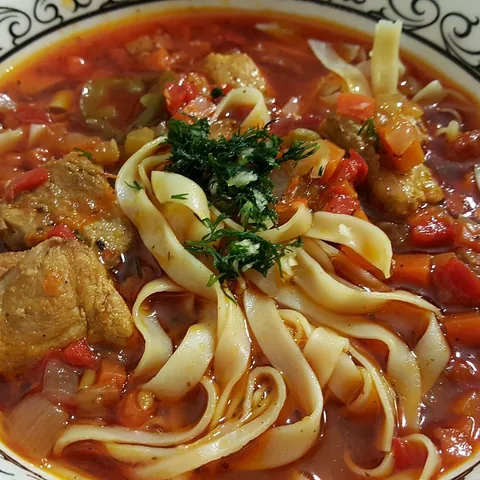
Boso lagman takes the same hand-pulled noodles as classic lagman but, instead of being served under a stew, they are thrown into a very hot wok with strips of beef, peppers, onion, tomato and garlic. The noodles pick up a light char and soak up the sauce, giving a drier, more intense dish. It is a favourite in Kyrgyz cafes, often eaten with vinegar and chili.
Diets
Allergens
Contains (in a typical recipe):
What it is made of
Recipe
Ingredients
- 500 g fresh pulled or thick wheat noodles
- 300 g beef, in thin strips
- 1 red and 1 green pepper, in strips
- 1 onion, 2 tomatoes, 3 garlic cloves
- 1 tbsp tomato paste
- 3 tbsp oil
- Salt, chili flakes
Method
- Boil the noodles until just tender, rinse and drain well.
- Heat oil in a wok and sear the beef on high heat.
- Add onion, garlic and peppers and stir-fry 3 minutes.
- Add tomatoes and tomato paste and cook to a thick sauce.
- Toss in the noodles and fry for 3-4 minutes until lightly charred; season and serve.
How to make it lighter
- Use less oil and a non-stick wok.
- Double the vegetables and reduce the noodles.
- Choose lean beef or chicken.
History
Boso lagman belongs to the Uyghur and Dungan noodle tradition that took root in Kyrgyzstan and neighbouring countries. The fried style is now as common on menus as the soupy version.
Count it in one photo
Point your camera at the table — Me Nutrition recognises Boso lagman (stir-fried lagman) and every other dish, with calories and macros for each. Ate only half? Slide it.
Download on the App StoreSimilar dishes
Values are estimates per 100 g for a typical recipe; home and restaurant versions vary. Diets and allergens are worked out from the ingredients of a typical recipe — always check with whoever cooked the dish. Not medical advice. Nutrition data: Me Nutrition dish database v15. How we count →