
Kyrgyz lagman (pulled noodles with beef stew)
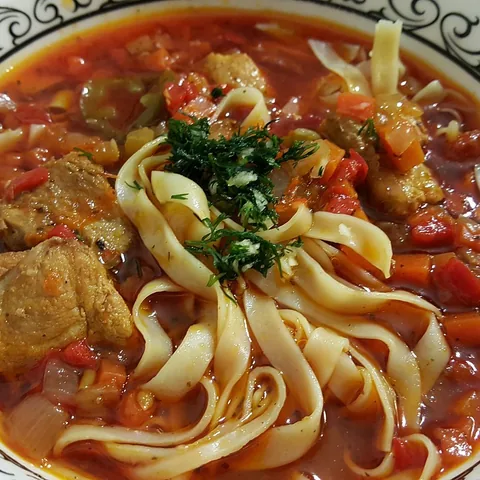
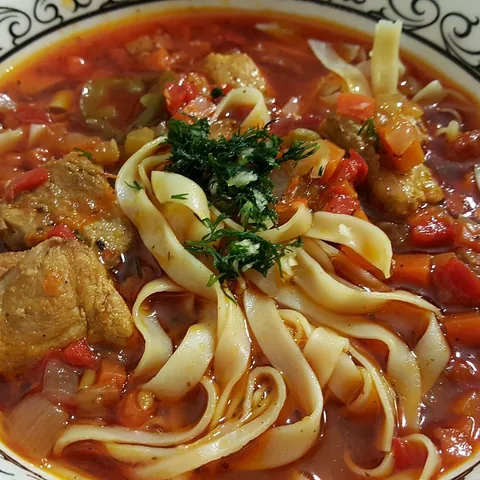
Lagman starts with long, chewy noodles stretched by hand from a soft dough, boiled and served in a deep bowl. Over them goes a thick stew, called vadzha, of beef with peppers, tomatoes, onion, garlic and often celery, radish or green beans. It is savoury and filling, and many add vinegar, chili or garlic at the table.
Diets
Allergens
Contains (in a typical recipe):
What it is made of
Recipe
Ingredients
- 400 g flour plus 200 ml salted water for noodles
- 300 g beef, diced
- 1 red pepper, 2 tomatoes, diced
- 1 onion, 3 garlic cloves
- 1 celery stalk, sliced
- 500 ml water or broth
- 2 tbsp oil
Method
- Knead flour and salted water into a soft dough, rest it 30 minutes, then pull into long thin noodles.
- Brown the beef in oil, then add onion and garlic.
- Add pepper, celery and tomatoes and cook for 5 minutes.
- Pour in the water, season and simmer for 30 minutes.
- Boil the noodles for 3-4 minutes, drain, place in bowls and spoon the stew over.
How to make it lighter
- Use lean beef and more vegetables in the sauce.
- Serve a smaller portion of noodles.
- Season at the table with vinegar instead of oily chili.
History
Lagman came to Kyrgyzstan with Uyghur and Dungan communities and is now one of the most popular dishes in every cafe and home. Its name is related to a Chinese word for pulled noodles.
Count it in one photo
Point your camera at the table — Me Nutrition recognises Kyrgyz lagman (pulled noodles with beef stew) and every other dish, with calories and macros for each. Ate only half? Slide it.
Download on the App StoreSimilar dishes
Values are estimates per 100 g for a typical recipe; home and restaurant versions vary. Diets and allergens are worked out from the ingredients of a typical recipe — always check with whoever cooked the dish. Not medical advice. Nutrition data: Me Nutrition dish database v15. How we count →