
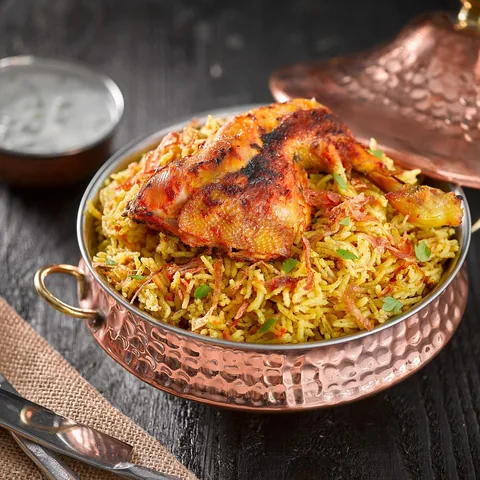
Lahori chargha (spicy fried whole chicken)
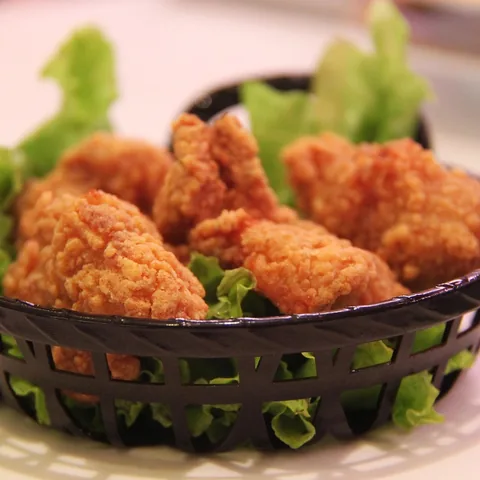
Chargha is a whole chicken marinated for hours in yogurt, lemon, chilli and ginger-garlic, then steamed until tender and finally deep-fried until the skin is red and crisp. The meat is juicy, sharp and fiery. It is cut into pieces and served with naan, raita and onion rings, often at Lahore's food streets.
Diets
Allergens
Contains (in a typical recipe):
What it is made of
Recipe
Ingredients
- 1 chicken (1.2 kg), skin slit
- 200 g plain yogurt
- 3 tbsp lemon juice (45 ml)
- 40 g ginger-garlic paste
- 2 tbsp chilli powder
- 1 tsp garam masala
- oil for frying (about 500 ml), salt
Method
- Mix yogurt, lemon, paste, spices and salt, rub into the chicken and marinate 6 hours.
- Steam the chicken on a rack for 30-40 minutes until nearly cooked.
- Let it cool and dry for 20 minutes.
- Heat the oil to 170 C and fry the chicken until deep red and crisp.
- Cut into pieces and serve with naan, raita and lemon.
How to make it lighter
- Roast in the oven at 200 C instead of frying.
- Remove the skin to cut calories.
- Serve with raita and salad instead of extra bread.
History
Chargha is closely linked with Lahore, where it is a street-food and festive favourite. Steaming before frying lets the spiced marinade reach the bone.
Count it in one photo
Point your camera at the table — Me Nutrition recognises Lahori chargha (spicy fried whole chicken) and every other dish, with calories and macros for each. Ate only half? Slide it.
Download on the App StoreSimilar dishes
Values are estimates per 100 g for a typical recipe; home and restaurant versions vary. Diets and allergens are worked out from the ingredients of a typical recipe — always check with whoever cooked the dish. Not medical advice. Nutrition data: Me Nutrition dish database v15. How we count →