
Leche de tigre (ceviche marinade shot)
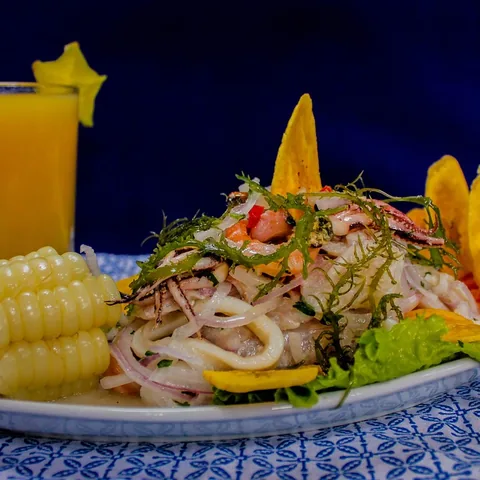
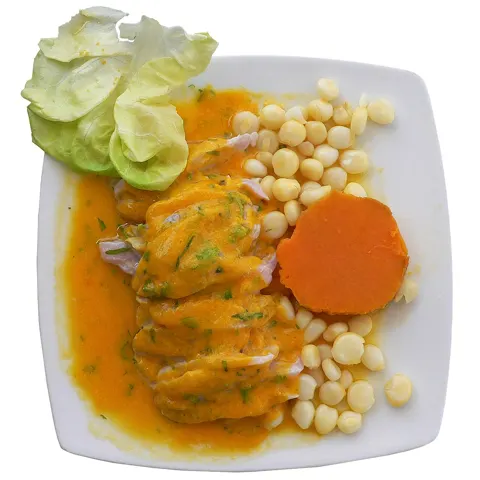
Leche de tigre, or tiger's milk, is the cloudy marinade left over when fish is cured in lime juice for ceviche. It is blended with fish trimmings, chile, garlic and celery, then served in a small glass with a few cubes of fish, red onion and corn kernels. It is sharp, salty, spicy and very refreshing. Many people drink it as a starter or a pick-me-up.
Diets
Allergens
Contains (in a typical recipe):
What it is made of
Recipe
Ingredients
- 300 g very fresh white fish
- 150 ml lime juice
- 1 small red onion (80 g)
- 1 ají amarillo or ½ tbsp paste
- 1 garlic clove
- 1 celery stalk (40 g)
- 100 ml cold fish stock or water
- cilantro, salt, 50 g cooked corn kernels
Method
- Cut 200 g of the fish into small cubes and keep cold.
- Blend the remaining fish with celery, garlic, chile, stock and a few onion slices.
- Strain the mixture and stir in the lime juice and salt.
- Add the fish cubes and marinate for 3–5 minutes.
- Pour into small glasses with onion, corn and chopped cilantro and serve immediately.
How to make it lighter
- Use only very fresh, sushi-grade fish and keep everything chilled.
- It is naturally low in fat; skip fried calamari garnishes to keep it that way.
- Go easy on salt and let the lime and chile carry the flavour.
History
Leche de tigre grew out of the habit of drinking the juice left in the ceviche bowl. Today it is a dish in its own right on Peruvian menus and has a reputation as a hangover cure, though that is folklore rather than science.
Count it in one photo
Point your camera at the table — Me Nutrition recognises Leche de tigre (ceviche marinade shot) and every other dish, with calories and macros for each. Ate only half? Slide it.
Download on the App StoreSimilar dishes
Values are estimates per 100 g for a typical recipe; home and restaurant versions vary. Diets and allergens are worked out from the ingredients of a typical recipe — always check with whoever cooked the dish. Not medical advice. Nutrition data: Me Nutrition dish database v15. How we count →