
Lobio nigvzit (beans with walnuts)
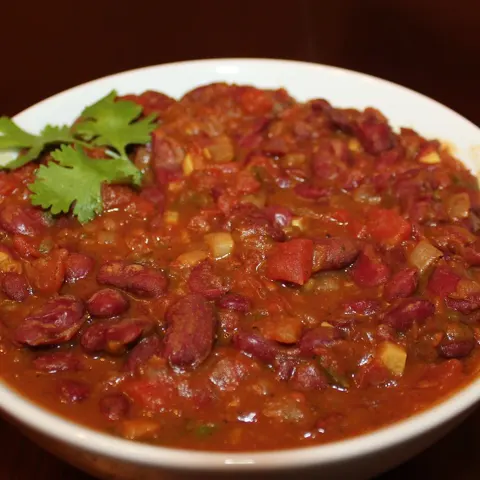
Lobio nigvzit is a cold or room-temperature bean dish in which soft red beans are mashed with a walnut paste flavoured with garlic, coriander, khmeli suneli and a little vinegar. The result is creamy, nutty and pleasantly tangy. It is served as part of a spread of appetizers with bread and fresh herbs.
Diets
Allergens
Contains (in a typical recipe):
What it is made of
Recipe
Ingredients
- 400 g dried red kidney beans, soaked
- 150 g walnuts
- 1 red onion
- 3 garlic cloves
- 1 tsp khmeli suneli
- 1 tbsp wine vinegar
- 40 g coriander, chili, salt
Method
- Cook the beans until very soft, then drain, keeping some cooking water.
- Grind the walnuts with garlic, spices, chili and salt.
- Mash the beans coarsely while still warm.
- Mix in the walnut paste, vinegar and enough cooking water for a creamy texture.
- Fold in finely chopped onion and coriander.
- Leave to cool and serve with bread and herbs.
How to make it lighter
- Reduce walnuts to 100 g for fewer calories.
- Serve on lettuce leaves instead of bread.
- Add pomegranate seeds for freshness and antioxidants.
History
Walnut pastes seasoned with garlic and spices are one of the defining techniques of Georgian cuisine. Combining them with beans produces this classic dish, popular during Lent.
Count it in one photo
Point your camera at the table — Me Nutrition recognises Lobio nigvzit (beans with walnuts) and every other dish, with calories and macros for each. Ate only half? Slide it.
Download on the App StoreSimilar dishes

Values are estimates per 100 g for a typical recipe; home and restaurant versions vary. Diets and allergens are worked out from the ingredients of a typical recipe — always check with whoever cooked the dish. Not medical advice. Nutrition data: Me Nutrition dish database v15. How we count →