
Pkhali (vegetable and walnut balls)
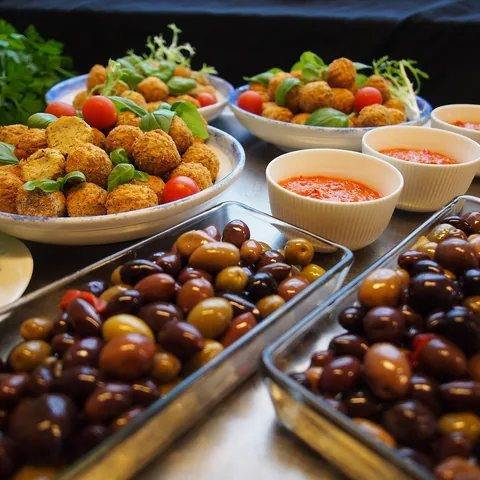
Pkhali is a family of cold Georgian appetizers made from cooked vegetables such as cabbage, spinach, beet or leek, finely chopped and mixed with a paste of walnuts, garlic, herbs and spices. The mixture is shaped into small balls or patties and topped with pomegranate seeds. It is creamy, nutty and fresh, and served with bread on almost every festive table.
Diets
Allergens
Contains (in a typical recipe):
What it is made of
Recipe
Ingredients
- 800 g white cabbage
- 150 g walnuts
- 3 garlic cloves
- 40 g coriander
- 1 tsp khmeli suneli
- 1 tbsp wine vinegar
- 50 g pomegranate seeds, salt
Method
- Boil the cabbage in salted water for 15 minutes until soft, then cool.
- Squeeze out as much water as possible and chop finely.
- Grind the walnuts with garlic, coriander, spices and salt into a paste.
- Mix the cabbage with the walnut paste and vinegar.
- Shape into small balls and press a dent in the top of each.
- Decorate with pomegranate seeds and chill before serving.
How to make it lighter
- Use slightly fewer walnuts and more vegetables to cut calories.
- Serve on cucumber slices instead of bread.
- Keep portions small: walnuts are nutritious but energy-dense.
History
Pkhali is one of the most characteristic dishes of Georgian meatless cooking and is widely eaten during Lent. The word refers both to the dish and broadly to the edible greens it is made from.
Count it in one photo
Point your camera at the table — Me Nutrition recognises Pkhali (vegetable and walnut balls) and every other dish, with calories and macros for each. Ate only half? Slide it.
Download on the App StoreSimilar dishes
Values are estimates per 100 g for a typical recipe; home and restaurant versions vary. Diets and allergens are worked out from the ingredients of a typical recipe — always check with whoever cooked the dish. Not medical advice. Nutrition data: Me Nutrition dish database v15. How we count →