
Luwombo (Ugandan banana-leaf stew)
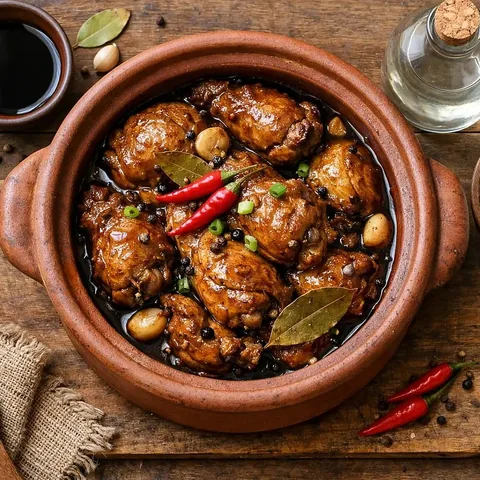
Luwombo is a Buganda stew in which chicken or beef is mixed with a sauce of ground peanuts, onion, tomato and sometimes mushrooms, wrapped in banana leaves and steamed for hours. The leaves give an earthy, smoky aroma and the meat becomes very tender. It is brought to the table in the parcel and eaten with matoke.
Diets
Allergens
Contains (in a typical recipe):
What it is made of
Recipe
Ingredients
- 600 g chicken pieces
- 100 g groundnut paste
- 1 onion
- 2 tomatoes
- 100 g mushrooms
- banana leaves
- salt
- water
Method
- Soften the banana leaves over a flame.
- Mix chicken, peanut paste, onion, tomato, mushrooms and salt with a little water.
- Place the mixture on leaves and fold into tight parcels, tying with string.
- Arrange in a pot with a rack and a little water.
- Steam for 2 hours and serve in the parcel.
How to make it lighter
- Use skinless chicken and fewer peanuts.
- Add vegetables like carrot and spinach.
- Serve with matoke or rice and a salad.
History
The dish is said to have been created in the royal kitchen of the Buganda kingdom in the 19th century and was long a celebratory dish. Today it is served at weddings, holidays and in restaurants in Kampala.
Count it in one photo
Point your camera at the table — Me Nutrition recognises Luwombo (Ugandan banana-leaf stew) and every other dish, with calories and macros for each. Ate only half? Slide it.
Download on the App StoreSimilar dishes
Values are estimates per 100 g for a typical recipe; home and restaurant versions vary. Diets and allergens are worked out from the ingredients of a typical recipe — always check with whoever cooked the dish. Not medical advice. Nutrition data: Me Nutrition dish database v15. How we count →